The diagnosis: the day I faced death
In December 2012 a routine colonoscopy found a large, irregular polyp in the colon. A week later the biopsy came back: a malignant tumour of about 3.5 centimetres. Looking back, his body had been sending signals for a year, from incomplete bowel movements to hands and feet that stayed cold even in summer. He had put it all down to drinking and stress.
Surgery removed 27 centimetres of colon. Cancer had reached the lymph nodes: stage 3, with chemotherapy to begin a month later.
Why he decided against chemotherapy
On the first day of chemotherapy he asked how many patients at his stage had been cured at that hospital. The reply was that he did not need to know. That moment sent him to books, and the books raised more questions: drugs that strike every fast-dividing cell, immune cells included, and tumours made of cells that respond differently.
The question he could not let go of was why the environment inside his body had let cancer grow. After a month he decided not to have chemotherapy. He states plainly that this was his own choice at the time and is not a recommendation for anyone to refuse chemotherapy.
Twelve years of studying medicine
He traced the years behind the diagnosis: drinking, smoking, careless eating, a decade of jet lag and pressure, no exercise. He closed the business he had run for nineteen years and started hiking. A man who once stopped on every small slope eventually walked the Langtang trail in the Himalaya.
He also asked why school teaches English and maths for twelve years but almost nothing about our own bodies. At fifty-three he became a student again and spent the next twelve years studying complementary and conventional medicine and the roots of chronic disease.
Why I am writing this book
The World Health Organization reports that 74 percent of deaths worldwide are caused by chronic disease, yet most patients take medication for life without getting better. The author writes from the position of someone who went through it as a patient, asking why drugs do not heal and why only lifelong management remains.
The book is for anyone worn down by chronic illness who wants to understand the root causes and take an active part in their own health.
Questions this chapter answers
Who is the author, Younsung Lee?
A former businessman who was diagnosed with stage 3 colon cancer in 2012, then spent twelve years studying complementary and conventional medicine and the roots of chronic disease.
Does the author advise against chemotherapy?
No. He writes that declining chemotherapy was his personal decision at the time and is not a recommendation for anyone. Treatment decisions belong with your own medical team.
Why was the book written?
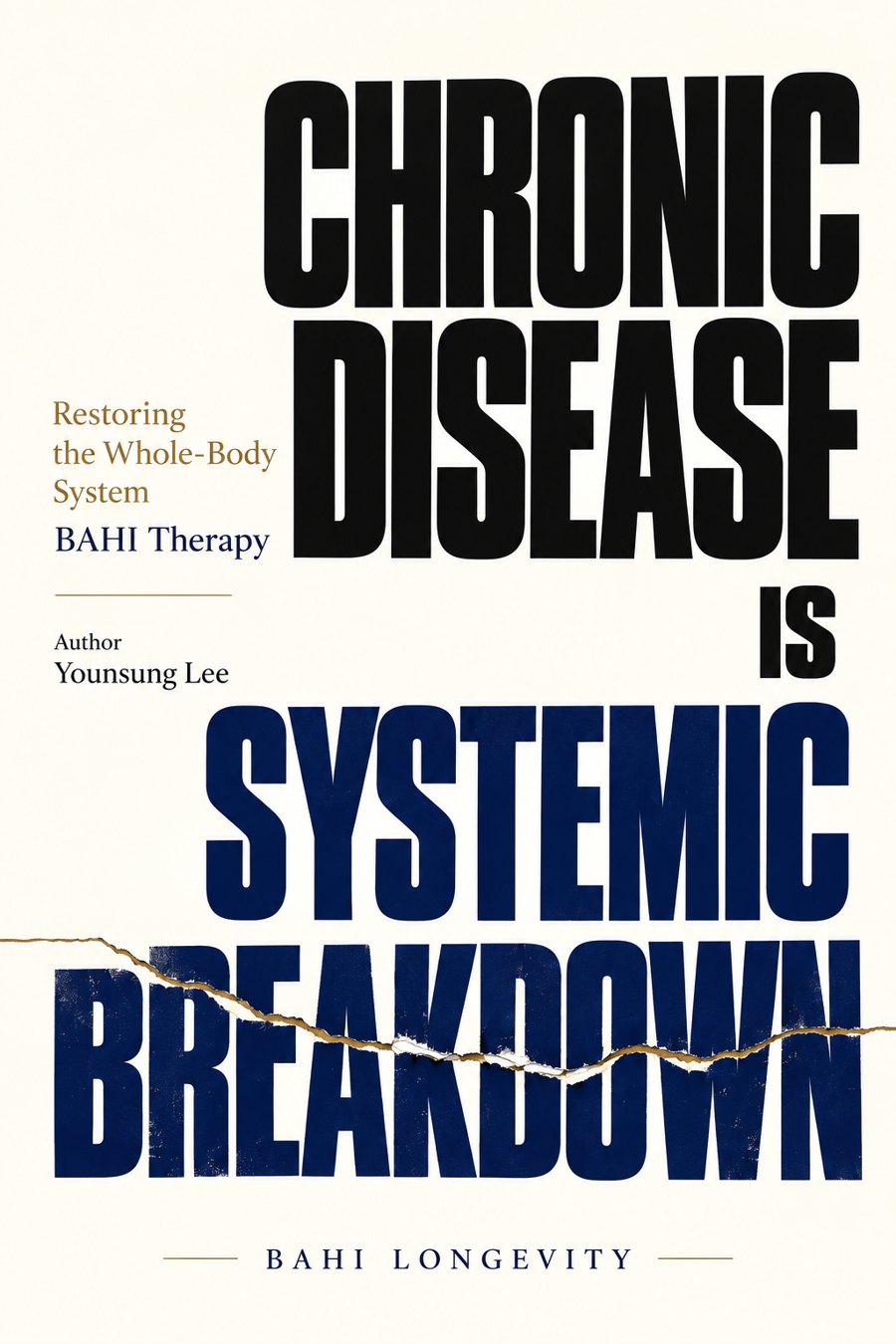
Because chronic disease causes most deaths worldwide while most patients never get better on lifelong medication. The book asks why, and looks at the body as one system rather than a list of symptoms.