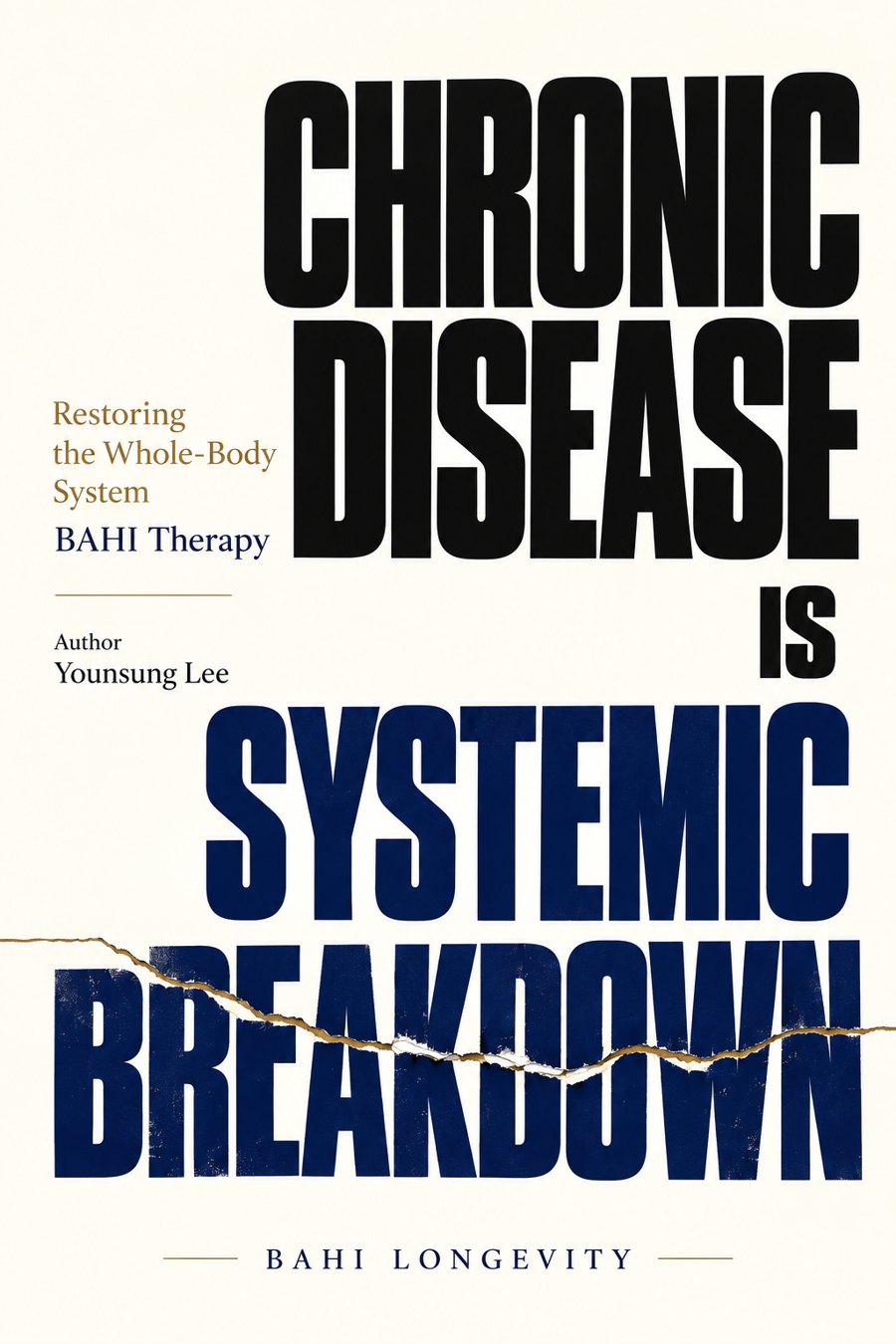
What is chronic disease?
According to the WHO, 74 percent of deaths worldwide are caused by chronic disease, and in Korea 84 to 90 percent of people over 65 live with at least one. Once called adult diseases, they are now called lifestyle diseases, because the way we live drives them.
High blood pressure and stubborn blood sugar are results, the author argues. Beneath them lie failing circulation, chronic inflammation, oxidative damage and weakened immunity. Doctors as different as Jason Fung, Robert Lufkin, Casey Means and Peter Attia have converged on the same view: cancer, diabetes, Alzheimer’s and heart disease grow from a single root, metabolism.
Drugs quiet symptoms; they do not restore
Pulling the bulb out of an engine warning light leaves the dashboard clean and the engine still overheating. Blood pressure pills lower the reading without asking why the vessels narrowed. Diabetes drugs lower glucose while insulin resistance stays. The author tells the story of his mother, whose prescriptions grew over forty years while none of her conditions improved.
He is clear that medicine has its place: emergencies, acute illness, saving lives. The book is not against medication. It asks whether a pill taken for life is only switching off the warning light.
The side-effect cascade
One pill causes swelling, a diuretic is added, the diuretic drains potassium, a supplement follows, and one pill becomes eight. With five or more drugs at once, interactions become hard to predict. Statins illustrate it: independent studies report muscle pain in up to 29 percent of users, and the drugs also block coenzyme Q10, which mitochondria need.
Antibiotic resistance and superbugs
One projection puts deaths from drug-resistant infections at ten million a year by 2050. Every course of antibiotics leaves the toughest bacteria behind, and bacteria evolve faster than new drugs arrive. The deeper question, the author says, is why our own defences became so weak.
The sweet trap of steroids
Steroids mimic cortisol and calm inflammation fast. Used long term, the adrenal glands slow their own production, and bone loss, steroid diabetes and immune suppression can follow. The slower alternative is to reduce what feeds the inflammation in diet and environment.
Why doctors treat their own families differently
Doctors and pharmacists often keep a child with a cold at home with fluids and rest, knowing antibiotics do nothing for a virus. The author does not blame individual doctors. The problem is the inertia of the system they work in.
Where trust between doctor and patient broke down
A typical Korean consultation lasts about three minutes, shaped by a fee system that pays for tests and procedures rather than conversation. The author’s answer is patient agency: learn about your condition and medication, ask questions, and seek a second opinion before major decisions.
Questions this chapter answers
What counts as a chronic disease?
An illness that lasts three months or more and is usually lifelong, such as high blood pressure, diabetes, high cholesterol, arthritis, cancer, heart disease and stroke.
Why do chronic disease medications have to be taken for life?
The book argues they control the numbers without reaching the cause, so the numbers rise again when the drug stops. Never change or stop a medication without your doctor.
What is a prescribing cascade?
When a drug’s side effect is treated with another drug, which brings its own side effects, so the list keeps growing.
What does the book see as the root of chronic disease?
A breakdown of metabolism: insulin resistance, failing mitochondria, chronic inflammation and damaged small vessels, showing up under different disease names.
See it in 3D on BAHI BODY
Read more on the blog
References from the book
- [2] World Health Organization. Noncommunicable diseases (fact sheet). WHO; 2023.
- [3] 통계청, 질병관리청. 고령자 만성질환 유병 현황. 2024.
- [4] 국민건강보험공단. 건강보험 주요통계. 2023.
- [5] Fung J. The Obesity Code. Greystone Books; 2016. (아울러 The Diabetes Code. Greystone Books; 2018. The Cancer Code. Harper Wave; 2020.)
- [6] Lufkin R. Lies I Taught in Medical School. BenBella Books; 2024.
- [7] Means C. Good Energy: The Surprising Connection Between Metabolism and Limitless Health. Avery; 2024.
- [8] Attia P, Gifford B. Outlive: The Science and Art of Longevity. Harmony; 2023.
- [10] Ward NC, Watts GF, Eckel RH. Statin toxicity: mechanistic insights and clinical implications. Circ Res. 2019;124(2):328-350.
- [11] O'Neill J, et al. Tackling drug-resistant infections globally: final report and recommendations. Review on Antimicrobial Resistance; 2016.