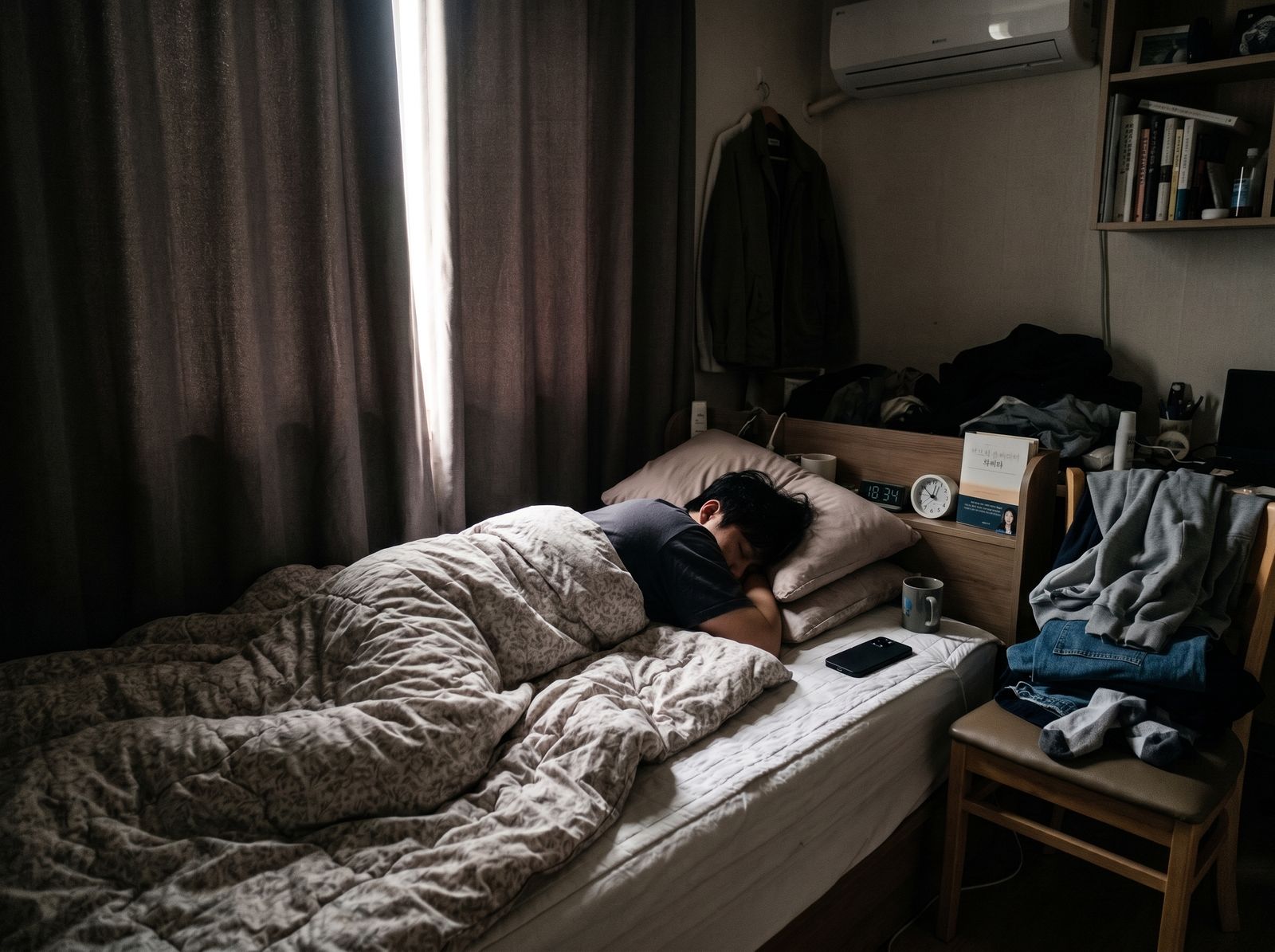
In short
- The benchmark is not a “normal range” but your parent’s own routine. A change that persists over weeks says more than a single off day.
- Korea’s disease agency reports that 5.6% of people aged 65+ fell in the past year; the US CDC notes that falling once doubles the chance of falling again.
- WHO estimates that over 25% of people over 60 have disabling hearing loss, and unaddressed hearing loss is linked to isolation and faster cognitive decline.
- Keep a full list of everything your parent takes. Don’t stop or change medicines on your own; review the list with a doctor or pharmacist.
The benchmark is their normal
In later life, health problems often show up first as small changes in daily life rather than in test results. The functional assessment for older adults described by Korea’s disease agency (KDCA) looks at the same ground: physical function such as walking and rising from a chair, memory and judgement, mood, everyday tasks like eating and dressing, and recent weight change and eating habits. That is roughly what a family can observe too.
What matters is the trend. One day without appetite may mean little; several weeks of smaller meals is a different story. “Has anything become harder for you lately?” tends to get a more useful answer than “Are you feeling okay?”
Walking and falls
Citing Korea’s 2023 national survey of older adults, KDCA reports that 5.6% of people aged 65 and over fell in the past year, an average of 1.9 times. The US CDC reports that more than one in four people aged 65+ fall each year. The surveys differ, so the figures can’t be compared directly, but both show that falls are common and tend to repeat. The CDC notes that falling once doubles the chance of falling again, and that falls are the most common cause of traumatic brain injury in older adults.
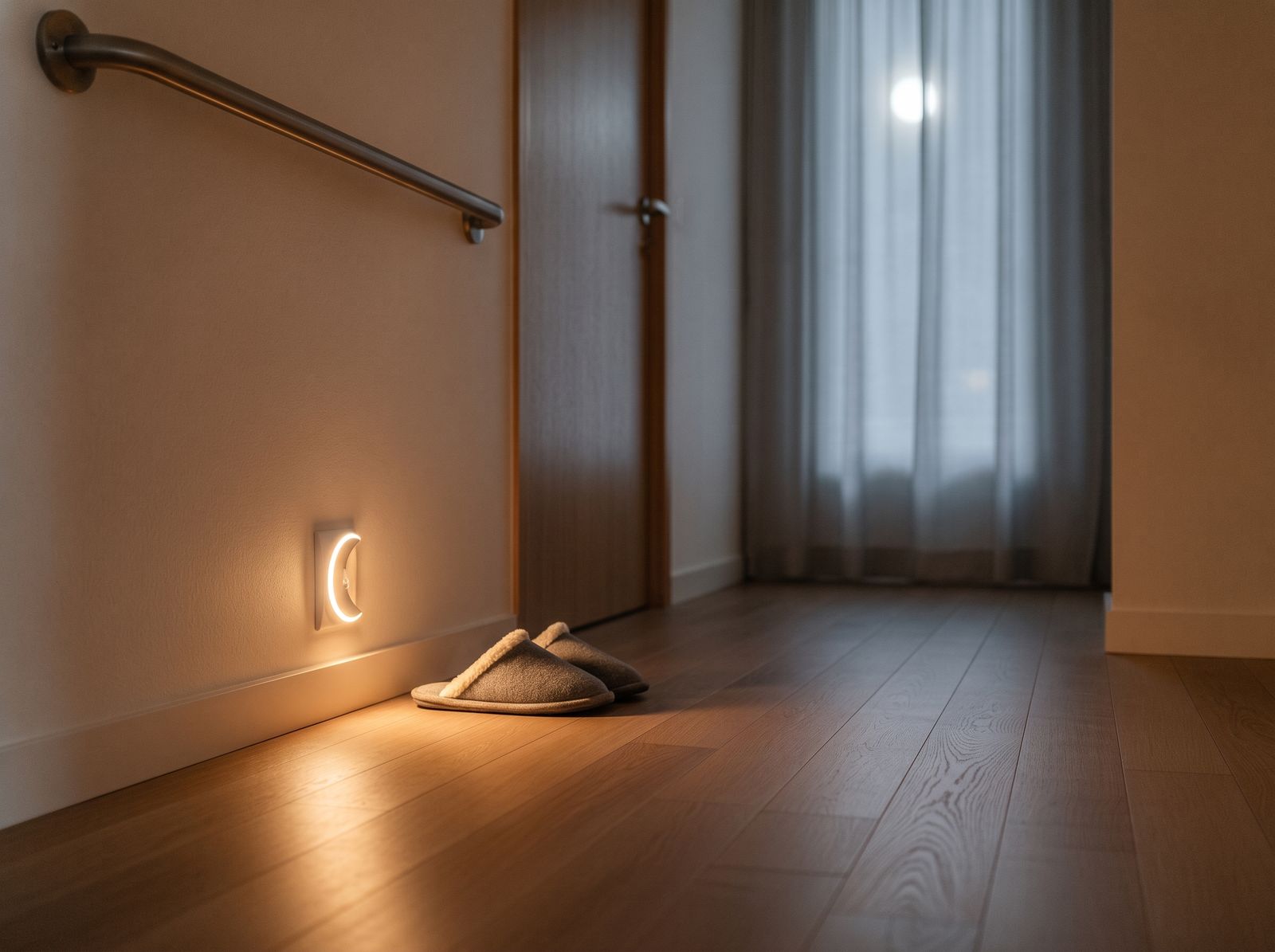
Signs a family can see: slower walking or shorter steps, steadying themselves on furniture or walls, needing both hands to push up from a chair, avoiding stairs. KDCA lists taking four or more medicines, poor eyesight, a drop in blood pressure on standing (orthostatic hypotension), foot problems or ill-fitting shoes, and hazards in the home as fall risk factors. Non-slip surfaces, grab rails, good lighting and dry floors are things you can check today. Muscle strength and balance are covered in our article on sarcopenia.
For clinicians, the CDC runs a fall-prevention framework called STEADI (Stopping Elderly Accidents, Deaths & Injuries) in three steps: screen for fall risk, assess modifiable risk factors, and intervene with effective strategies. Mentioning a change in walking or a recent fall at an appointment is how that process starts.
Hearing and vision
WHO estimates that over 25% of people older than 60 have disabling hearing loss. It describes unaddressed hearing loss as linked to social withdrawal, loneliness, a higher risk of dementia and faster cognitive decline, and recommends regular hearing screening for older adults and rehabilitation such as hearing aids. Watch for a louder TV, frequent requests to repeat things, or dropping out of group conversations.
Changes in vision can show up as hesitation in dim light or unusual caution on stairs. That is why KDCA lists poor eyesight as a fall risk factor and properly fitted glasses as a preventive step.
Eating and weight, memory and mood
- Eating: whether they eat enough matters as much as what they eat. Look for skipped meals, an empty fridge, clothes fitting more loosely. Unintentional weight loss is worth raising with a doctor.
- Memory: occasionally losing a name matters less than repeating the same questions or starting to miss appointments, medicines or bills. Memory changes can have many causes, such as medicines, sleep, mood or other illness, so they deserve a proper check.
- Mood and activity: if a parent has stopped going to groups or shopping, ask why before urging them to get out more. Pain, difficulty walking, hearing problems, fatigue or low mood may be behind it.
- Sleep: frequent waking at night, heavy daytime sleepiness, very loud snoring or what look like pauses in breathing are also worth mentioning at an appointment.
The full list of medicines
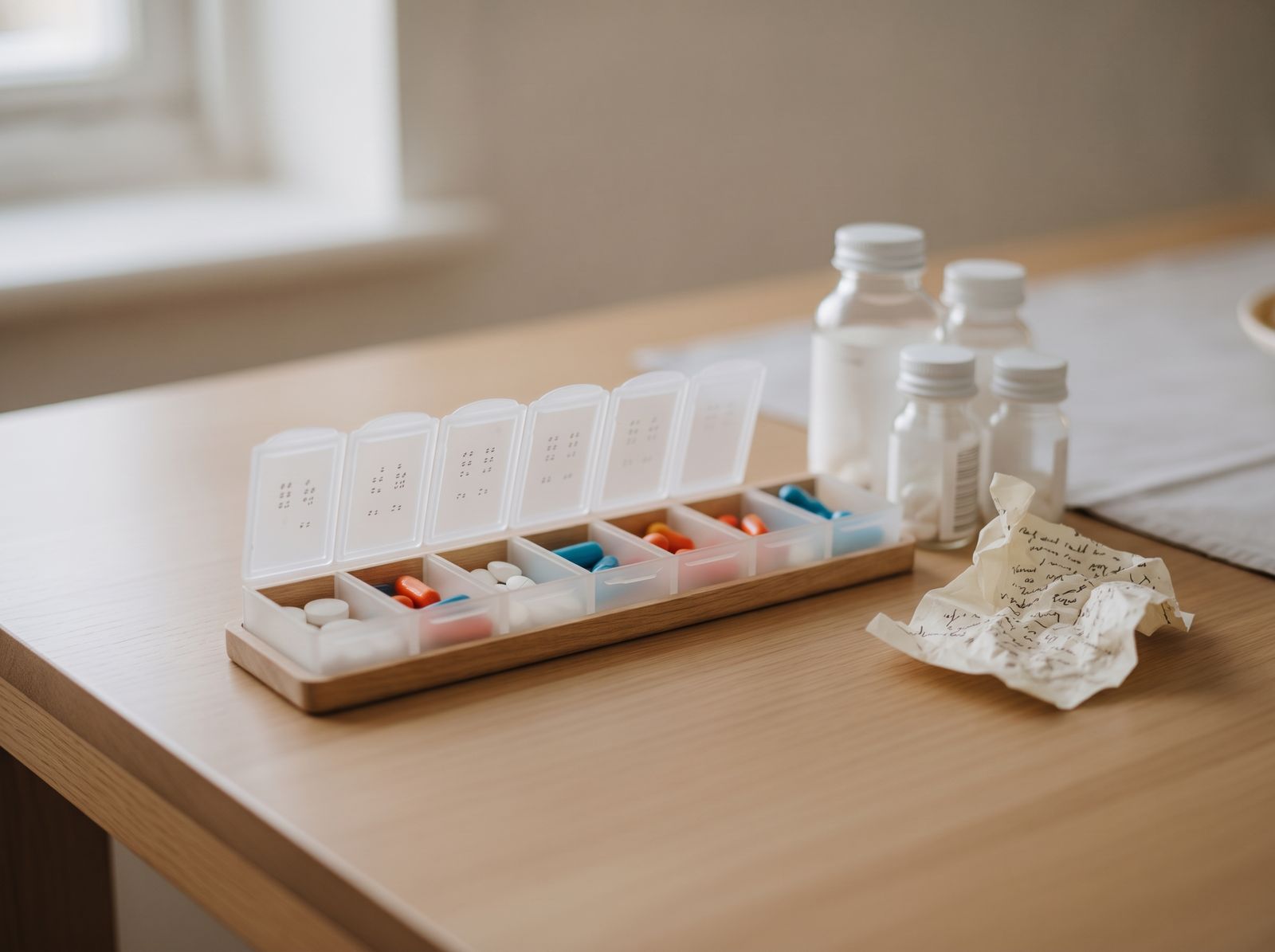
Prescriptions from several clinics, over-the-counter products and supplements often overlap. A single written list with names and doses is easy to bring to any appointment. The American Geriatrics Society updated its Beers Criteria, a list of medicines generally best avoided in people aged 65 and over, in 2023, and states that the criteria should support, not replace, shared decision-making between clinician and patient. Even if something on the list worries you, don’t stop it on your own; go through it with a doctor or pharmacist.
When not to wait
- After a fall with severe pain, a blow to the head, or difficulty moving (KDCA guidance).
- Sudden confusion, slurred speech, or weakness on one side: call emergency services right away.
- Unintentional weight loss, or eating, memory or mood changes lasting several weeks: book an appointment rather than waiting for the next routine visit.
- New dizziness, drowsiness or confusion after a medicine change: tell the prescriber or pharmacist promptly.
This article is meant to help families notice change. It does not replace diagnosis or treatment.
Questions
What should I check first in an ageing parent?
Compare seven areas with their usual routine: walking and balance, hearing and vision, eating and weight, memory and everyday tasks, mood and going out, sleep, and medicines. Raise any change that lasts more than a few weeks with their doctor.
Are older adults who fall once more likely to fall again?
Yes. The US CDC says falling once doubles the chance of falling again. Mention any fall to a doctor even if there was no injury, and review home hazards and medicines together.
My parent takes a lot of pills. Can we cut some?
Not on your own. Bring a full list of prescriptions, over-the-counter medicines and supplements to a doctor or pharmacist and ask for a review.
Sources
- 질병관리청 국가건강정보포털. 낙상. 2026 업데이트 (2023년도 노인실태조사 인용)
- 질병관리청 국가건강정보포털. 노인기능평가. 2026 업데이트
- Centers for Disease Control and Prevention. Older Adult Falls Data: Facts and Stats
- Centers for Disease Control and Prevention. About STEADI (Stopping Elderly Accidents, Deaths & Injuries)
- World Health Organization. Deafness and hearing loss. Fact sheet
- By the 2023 American Geriatrics Society Beers Criteria Update Expert Panel. American Geriatrics Society 2023 updated AGS Beers Criteria for potentially inappropriate medication use in older adults. J Am Geriatr Soc. 2023
Want to know more?
If you’d like to try BAHI Longevity or talk to us, leave your details and we’ll be in touch.