In short
- A large shift in sleep timing between workdays and free days is called social jetlag. It is larger in evening types.
- In a 2019 controlled experiment, two days of weekend recovery sleep did not prevent the drop in insulin sensitivity from recurring short sleep, and body clock timing shifted later after the weekend.
- In a Swedish cohort of over 40,000 people, those who slept short on weekdays but long at weekends had mortality no different from consistent 6 to 7 hour sleepers.
- Expert consensus: regular sleep and wake times matter, but when weekday sleep falls short, weekend catch-up sleep may help.
Jetlag without travelling
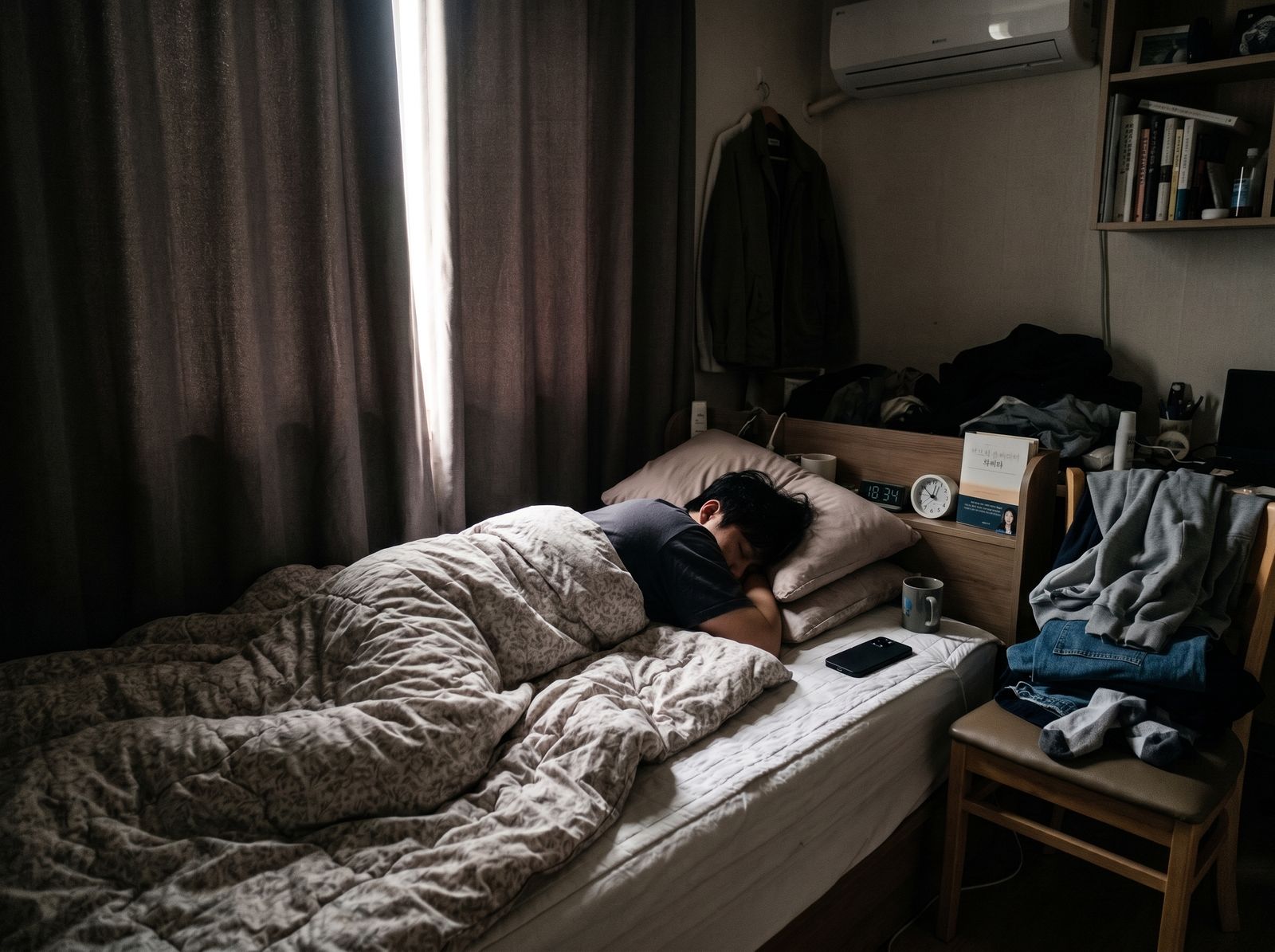
People differ in when they naturally get sleepy and wake up (their chronotype), largely set by the internal clock. Work and school start at the same time for everyone. In 2006 German researchers named the resulting mismatch between biological and social time, visible as a shift in sleep timing between workdays and free days, ‘social jetlag’.
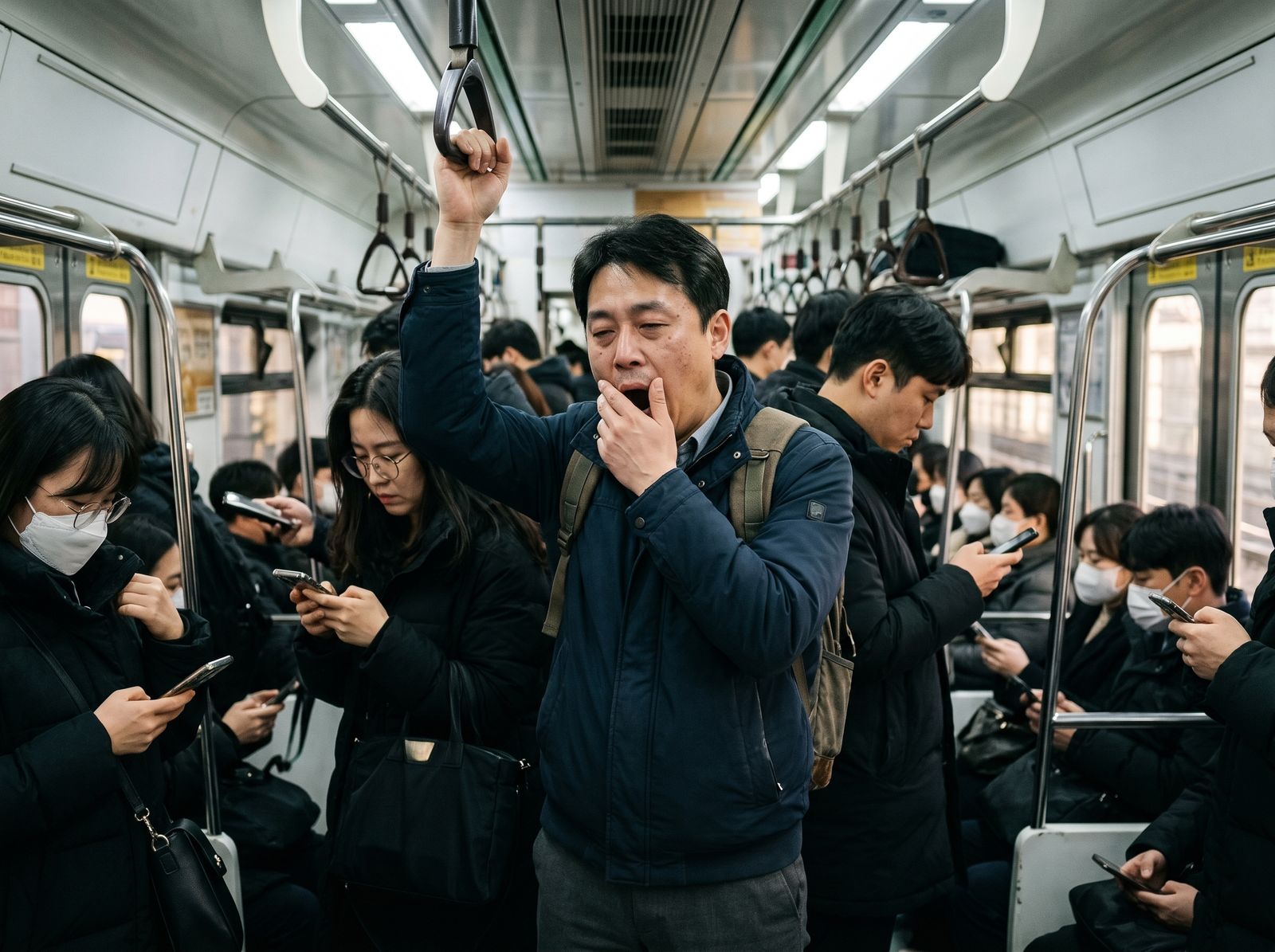
In their survey of 501 people, later chronotypes showed the biggest gap between workday and free-day sleep, building up sleep debt during the week and repaying it on free days. Later types used more stimulants, smoking above all, with links strongest in people up to age 25; the authors read this as an effect of social jetlag rather than of chronotype itself. Because this was a questionnaire study, it cannot prove cause.
Weekend recovery sleep in the lab
A 2019 University of Colorado study in Current Biology housed healthy young adults in the lab in three groups: 9-hour sleep opportunities every night (8 people), 5 hours every night (14), and 5 hours for a five-day workweek, then a weekend of unrestricted sleep, then two more 5-hour nights (14).
- Allowed to sleep as long as they liked, participants slept only about 1.1 hours more than baseline across the whole weekend.
- When short sleep resumed, body clock timing shifted later, and after-dinner eating and body weight rose.
- In the weekend group, insulin sensitivity fell by about 9% to 27% below baseline once short sleep resumed.
The authors concluded that weekend recovery sleep is not an effective way to prevent the metabolic changes of recurring short sleep. With about 30 participants over a short period, it is a lab result, not a full picture of real life.
Weekend sleep is not worthless
A 2019 Swedish study that followed 43,880 people for 13 years paints a different picture. Under 65, those who slept 5 hours or less on both weekdays and weekends had 65% higher mortality than people consistently sleeping 6 to 7 hours. But those who slept short on weekdays and long at weekends had mortality no different from the 6 to 7 hour group. Over 65, weekend sleep showed no link with mortality. The authors suggest long weekend sleep may partly compensate for short weekday sleep, though sleep was asked about only once at the start.
A 2023 National Sleep Foundation consensus panel of sleep and circadian experts, drawing on 63 publications, reached a similar view: consistent sleep and wake times matter for health, safety and performance, but when weekday sleep is insufficient, weekend catch-up sleep may be beneficial. In short, weekend sleep pays back part of the debt; it does not erase repeated weekday shortfalls or the shifting schedule. What happens in the brain during sleep is covered in the article on the glymphatic system.
Sleep and skin: how far the evidence goes
There is some evidence behind looking dull after short sleep. In a 2022 French study, 24 women aged 30 to 55 who normally slept well were limited to 3 hours a night for two nights; skin hydration fell, water loss through the skin rose, and facial brightness and saturation dropped in photographs. In a 2015 US study of 60 women, poor sleepers (low sleep quality and 5 hours or less a night) had higher intrinsic ageing scores than good sleepers, and 30% less skin barrier recovery 72 hours after the barrier was disrupted.
Both studies are small and looked at severe restriction or chronic poor sleep. There is no evidence that sleeping long at the weekend ages the skin or cancels out skincare. A puffy face on a Saturday morning may have other explanations, such as a salty late meal, alcohol or shifted mealtimes.
What you can do, and when to see a doctor
- Fix your wake-up time before your bedtime. Narrowing the gap between weekday and weekend wake times is the most direct way to shrink social jetlag.
- If the week was short on sleep, a little extra at the weekend is fine. If sleeping into the afternoon makes it hard to fall asleep on Sunday night, scale it back.
- If you need a long lie-in every weekend just to cope, treat it as a sign that weekday sleep is too short, and look at the weekday schedule first.
- If you are very sleepy during the day despite long sleep, are told you snore loudly or gasp in your sleep, or wake with headaches, see a doctor about a sleep disorder such as sleep apnoea.
Questions
Can you catch up on lost sleep at the weekend?
Partly, not fully. In a lab study, weekend recovery sleep did not prevent the metabolic effects of repeated weekday short sleep. Getting more sleep on weekdays comes first.
What is social jetlag?
The mismatch between the sleep timing your body clock prefers and your social schedule, such as work or school, which shows up as different sleep times on workdays and free days. It is larger in evening types.
How long is it OK to sleep in?
There is no fixed limit. Experts advise waking at a similar time daily, while accepting that catch-up sleep can help after a short week. If it keeps you awake on Sunday night, cut it back.
Sources
- Wittmann M, Dinich J, Merrow M, Roenneberg T. Social jetlag: misalignment of biological and social time. Chronobiol Int. 2006
- Depner CM, Melanson EL, Eckel RH, et al. Ad libitum Weekend Recovery Sleep Fails to Prevent Metabolic Dysregulation during a Repeating Pattern of Insufficient Sleep and Weekend Recovery Sleep. Curr Biol. 2019
- Åkerstedt T, Ghilotti F, Grotta A, et al. Sleep duration and mortality. Does weekend sleep matter? J Sleep Res. 2019
- Sletten TL, Weaver MD, Foster RG, et al. The importance of sleep regularity: a consensus statement of the National Sleep Foundation sleep timing and variability panel. Sleep Health. 2023
- Léger D, Gauriau C, Etzi C, et al. "You look sleepy…" The impact of sleep restriction on skin parameters and facial appearance of 24 women. Sleep Med. 2022
- Oyetakin-White P, Suggs A, Koo B, et al. Does poor sleep quality affect skin ageing? Clin Exp Dermatol. 2015
Want to know more?
If you’d like to try BAHI Longevity or talk to us, leave your details and we’ll be in touch.