In short
- Orthosomnia describes people who chase perfect sleep-tracker data and end up more anxious and sleeping worse. The term was introduced in a sleep medicine journal in 2017.
- Wrist devices are fairly good at resting heart rate and at telling whether you are asleep, but weaker at detecting wakefulness, sleep stages and calories burned.
- In a study of people with atrial fibrillation, wearable users were more preoccupied with symptoms and used more healthcare. That is an association, not proof of cause.
- Watching trends over weeks, and tracking only metrics you would act on, is a practical way to use the data.
More can be measured than ever
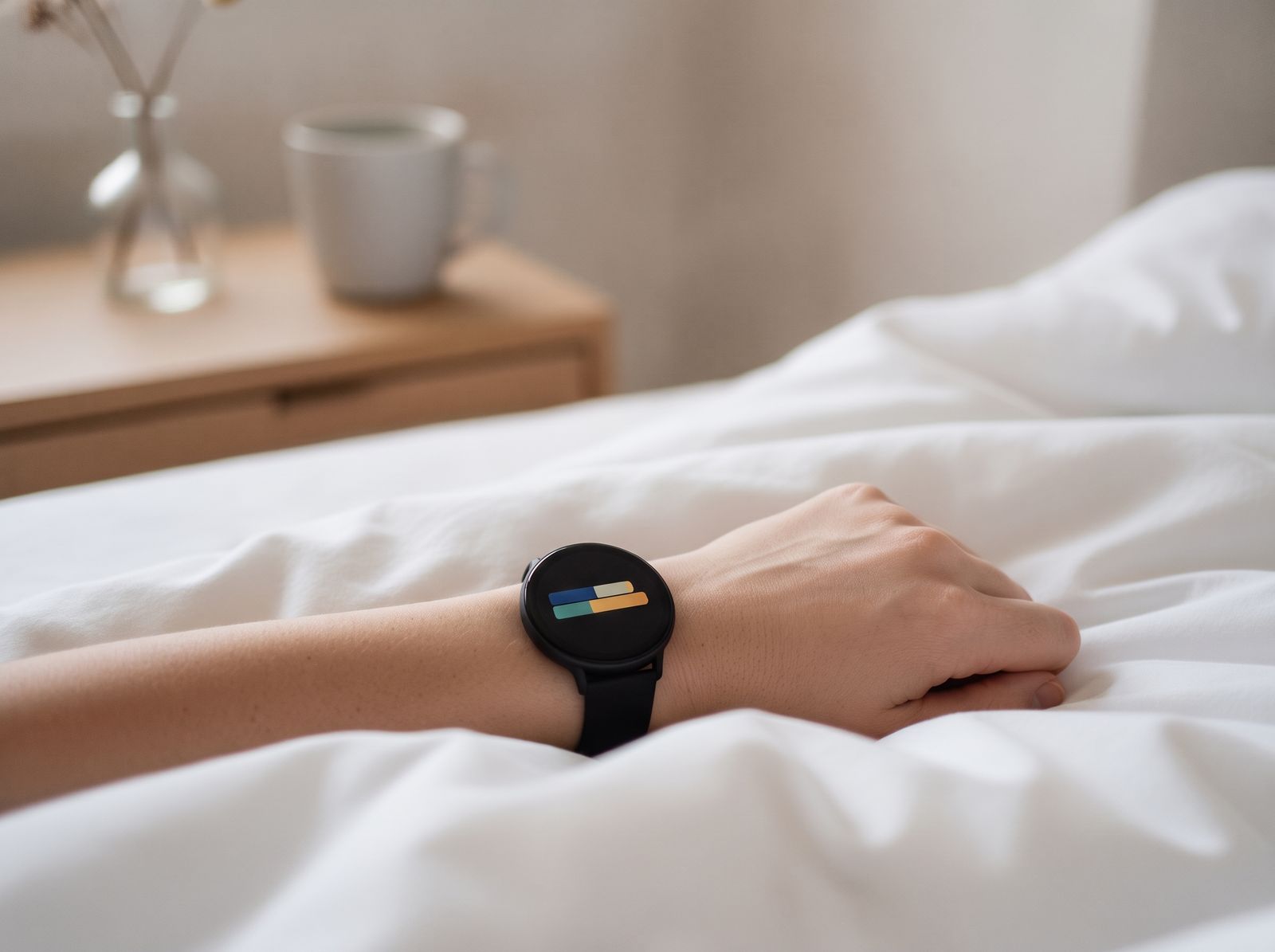
Watches, rings and phone apps record steps, heart rate, heart rate variability (HRV), sleep duration and sleep stages. Some fold these into a single “recovery” or “readiness” score. As a way to see patterns and reflect on habits, they are genuinely useful.
The trouble starts when being able to measure something turns into feeling obliged to manage it. Trying to hit daily targets for sleep, heart rate, steps and recovery all at once turns looking after your health into another job.
Orthosomnia: when sleep data gets in the way of sleep
In a 2017 paper in the Journal of Clinical Sleep Medicine, Baron and colleagues described a growing number of patients seeking treatment for insomnia or short sleep they had diagnosed themselves from tracker data. Periods of “light” or “restless” sleep on the device were read as the cause of daytime fatigue, which turned into a perfectionist quest for ideal numbers. The authors called it orthosomnia, from ortho-, “correct”, and somnia, “sleep”.
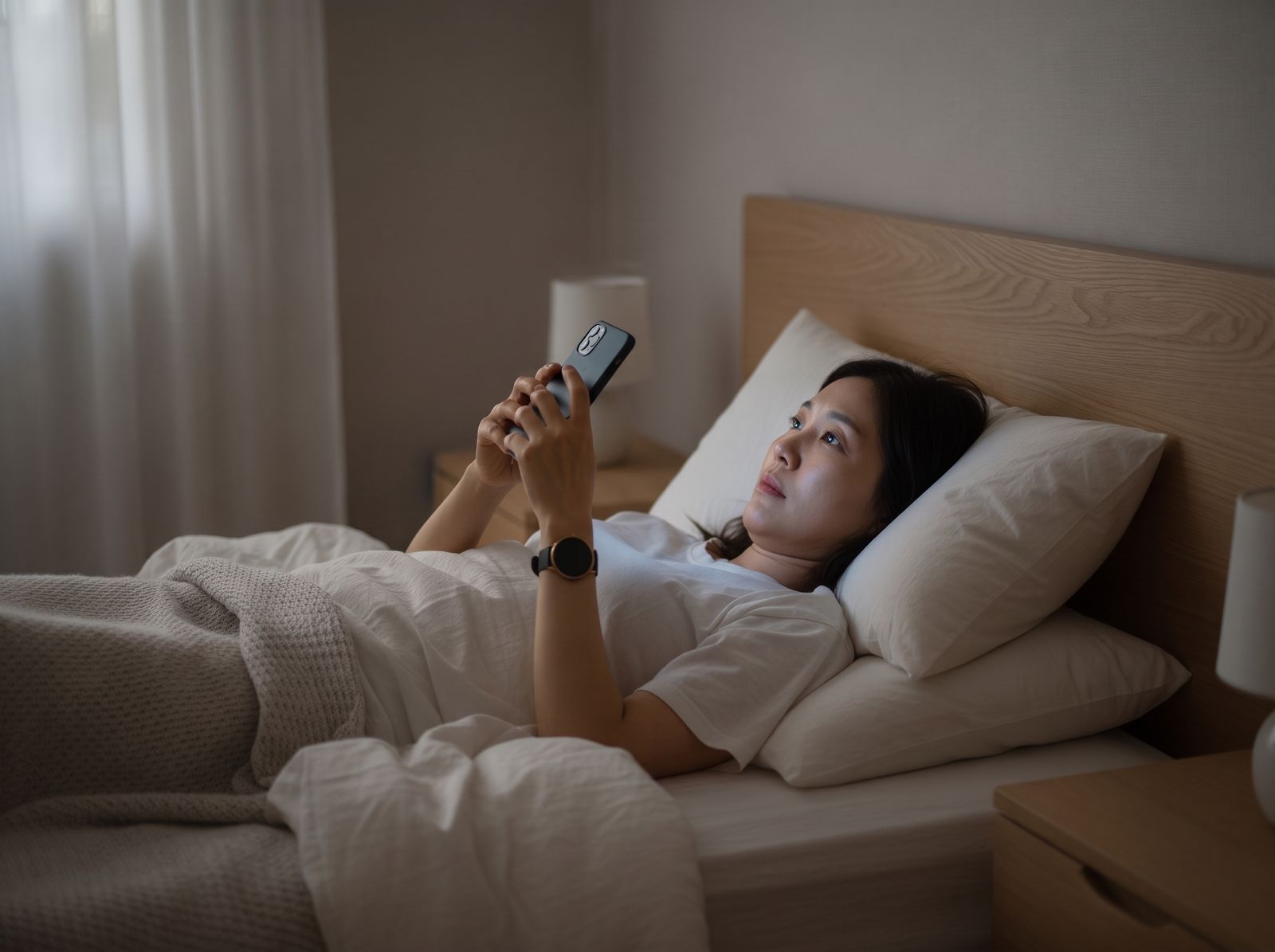
Notably, the patients felt the tracker matched their experience better than validated tests such as polysomnography or actigraphy. The authors suggested clinicians balance explaining the devices’ limits against patients’ enthusiasm for objective data, and fold tracker use into cognitive behavioural therapy for insomnia. How sleep relates to the brain is covered in what happens in the brain during sleep.
What wearables measure well, and what they don’t
Sleep
A 2021 study in Sleep tested consumer sleep devices against polysomnography in 34 healthy young adults over three nights. The devices were good at detecting sleep (sensitivity 0.93 or higher) but low to moderate at detecting wake (specificity 0.18 to 0.54). Sleep-stage results were inconsistent, and performance dropped on nights of disrupted sleep. Total sleep time is broadly usable; deep and REM sleep percentages are estimates.
Heart rate and calories
In 2017, a Stanford team compared seven wrist devices on 60 people against an ECG and indirect calorimetry. During cycling, six devices had a median heart-rate error under 5%, yet none estimated energy expenditure with an error below 20%. A 2020 Duke study found heart-rate error during activity was on average about 30% higher than at rest. Resting heart rate is fairly trustworthy; calorie figures are best treated as a rough direction.
When alerts become anxiety
A 2024 study in the Journal of the American Heart Association compared 83 wearable users with non-users among 172 people with atrial fibrillation. Users monitored and dwelt on their symptoms more and had more concerns about treatment. One in five users felt anxious and always contacted their doctor after an irregular-rhythm notification, and users had more AF-related tests and procedures.
This was a retrospective observational study, so it cannot show that wearables caused the anxiety; already-worried people may simply be more likely to wear one. The authors called for randomised trials. Still, it is worth knowing that alerts can affect both healthcare use and peace of mind. You can explore the heart in our body atlas.
Using the data without letting it run you
- Before tracking something, decide what you would change based on it. If there is no answer, you can switch that metric off.
- Look at two to four weeks of trend, not one day’s score. Sleep, heart rate and how you feel all vary from day to day.
- Ask yourself how you feel before opening the app, so the number doesn’t overwrite the sensation.
- Don’t set targets on low-accuracy values such as sleep stages or calories.
- Stop tracking once it has done its job. If you started to check your sleep routine, you can turn it off once the routine has settled.
When to talk to a doctor
Symptoms matter more than device readings. Palpitations, dizziness, chest pain or fainting need medical attention whatever your watch says. And if alerts keep appearing without symptoms, or worry about sleep scores is making it harder to fall asleep, that alone is a reason to talk to a doctor. Wearables are not diagnostic tools.
Questions
Is orthosomnia a medical diagnosis?
No. It is a name researchers gave in 2017 to sleep getting worse through preoccupation with sleep-tracker data. It is not a formal diagnosis.
Are smartwatch sleep stages accurate?
Compared with polysomnography, sleep-stage results were inconsistent across devices. Total sleep time is a reasonable guide; stage percentages are estimates.
Can I trust my watch’s calorie count?
In one study, none of seven devices estimated calories with an error below 20%. Treat the figure as a rough trend, not an exact value.
Sources
- Baron KG, Abbott S, Jao N, Manalo N, Mullen R. Orthosomnia: Are Some Patients Taking the Quantified Self Too Far? J Clin Sleep Med. 2017
- Chinoy ED, et al. Performance of seven consumer sleep-tracking devices compared with polysomnography. Sleep. 2021
- Shcherbina A, et al. Accuracy in Wrist-Worn, Sensor-Based Measurements of Heart Rate and Energy Expenditure in a Diverse Cohort. J Pers Med. 2017
- Bent B, Goldstein BA, Kibbe WA, Dunn JP. Investigating sources of inaccuracy in wearable optical heart rate sensors. NPJ Digit Med. 2020
- Rosman L, et al. Wearable Devices, Health Care Use, and Psychological Well-Being in Patients With Atrial Fibrillation. J Am Heart Assoc. 2024
Want to know more?
If you’d like to try BAHI Longevity or talk to us, leave your details and we’ll be in touch.