In short
- The first moments in cold water trigger the cold shock response: gasping, rapid breathing, and a jump in heart rate and blood pressure.
- A meta-analysis of 52 studies found that after high-intensity exercise, cold-water immersion improved soreness, perceived recovery and muscular power at 24 hours, but not strength.
- In a 12-week strength study, people who took a cold bath after every session gained less strength and muscle than those who recovered actively.
- If you have heart disease or high blood pressure, talk to a doctor first. Avoid plunging alone or putting your head under.
The first moments: the cold shock response
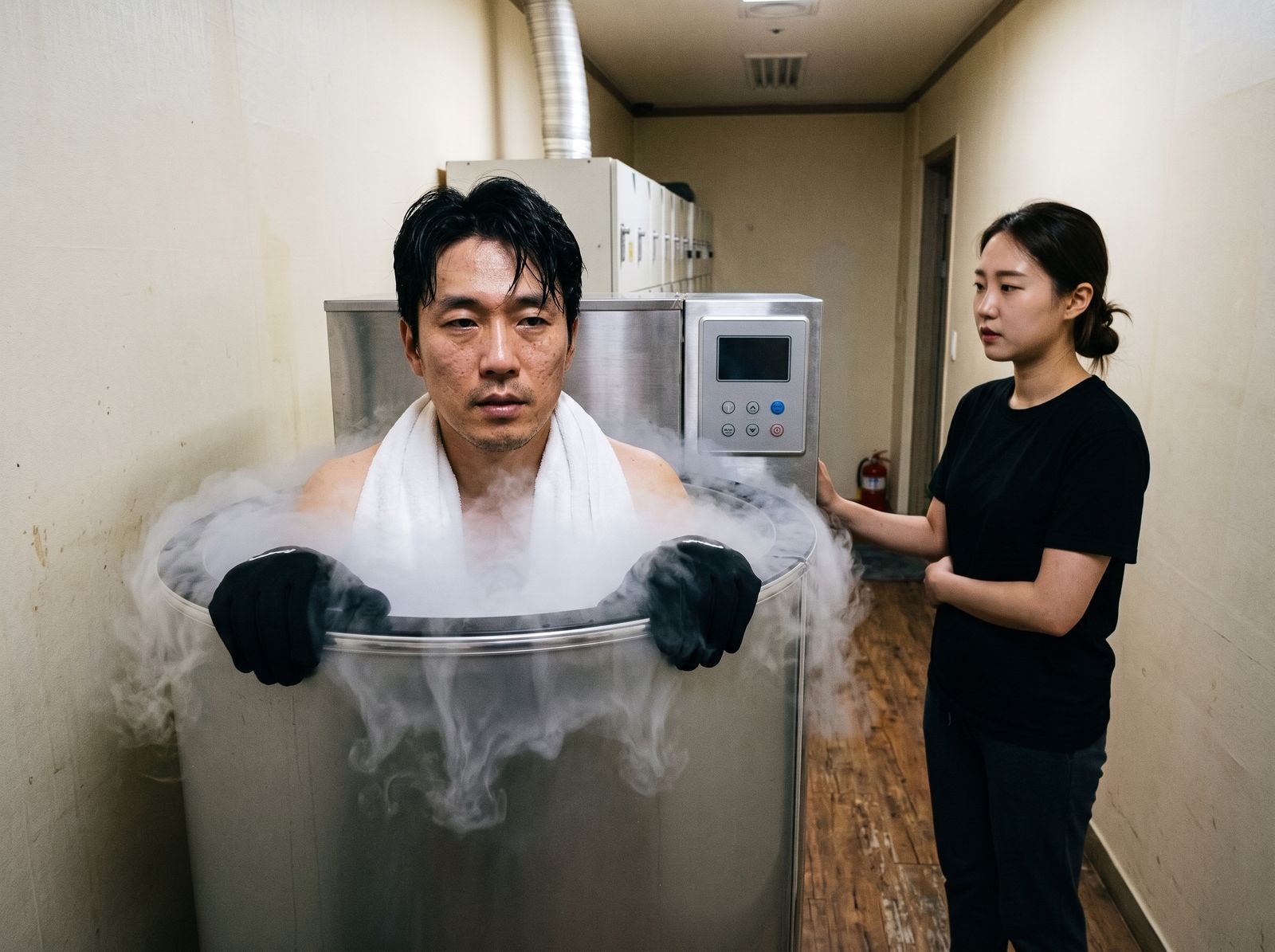
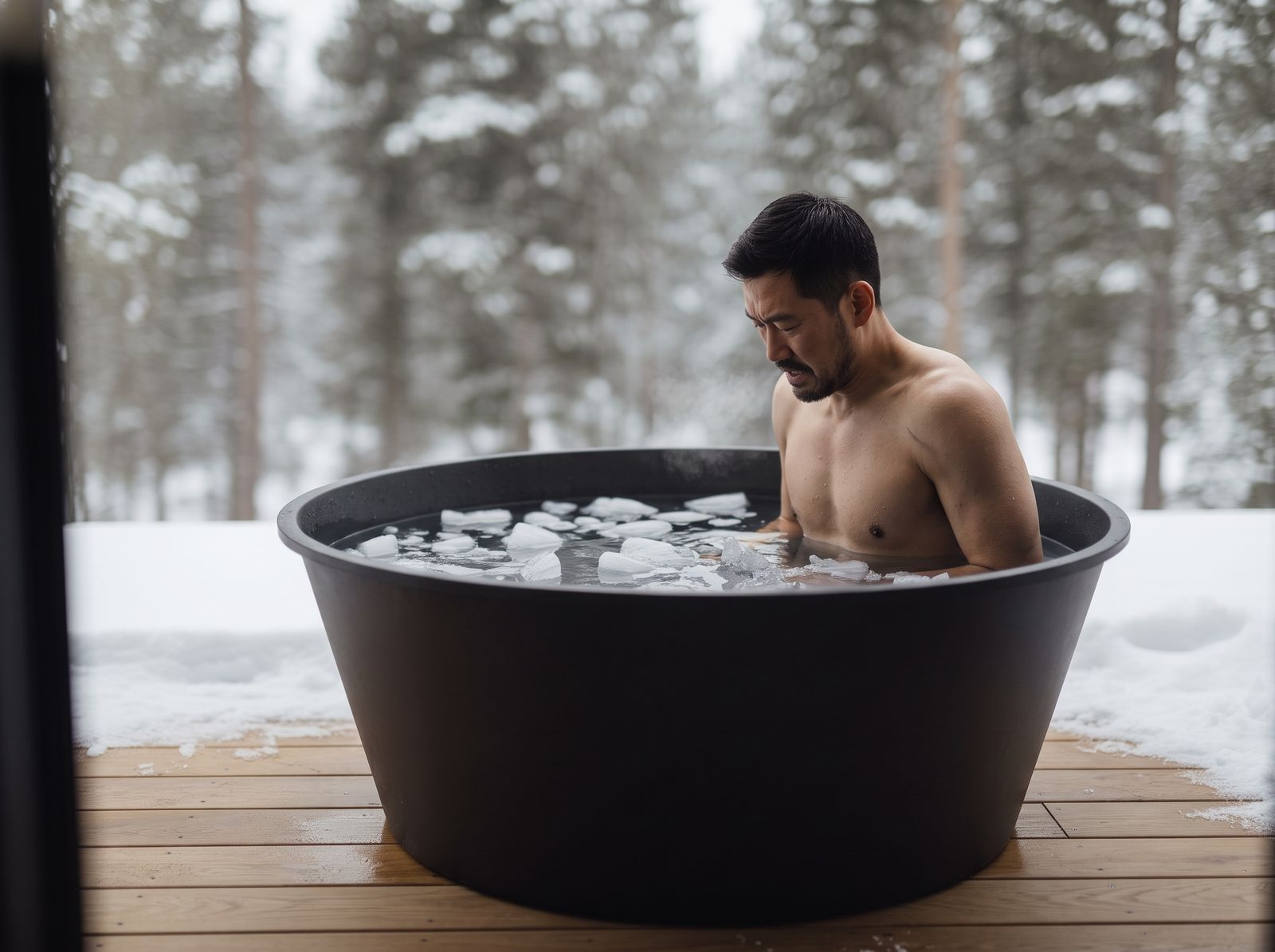
When cold receptors in the skin meet sudden cold water, the body fires a reflex called the cold shock response. The sympathetic nervous system kicks in: you gasp, breathing speeds up beyond your control, heart rate and blood pressure rise, and blood vessels in the skin constrict. A 2022 Norwegian review of 104 studies on voluntary cold-water exposure links this response to an increased risk of drowning.
Put your face under and hold your breath, and a second reflex joins in: the diving response. Cold shock speeds the heart; the diving response slows it. The British physiologists Shattock and Tipton proposed that this “autonomic conflict”, both signals firing hard at once, may explain the heart rhythm disturbances seen even in healthy volunteers during cold-water submersion.
The response tends to weaken with repetition; the same review describes studies in which breathing and cold shock responses diminished after repeated immersion. That does not make the risk disappear.
After exercise: soreness and feeling recovered
Recovery from exercise is where cold-water immersion has been studied most. A 2022 meta-analysis in Sports Medicine pooled 52 studies comparing it with passive rest in physically active people. After high-intensity exercise, cold water reduced muscle soreness at 24 hours, improved perceived recovery and the recovery of muscular power, and lowered creatine kinase (CK), a marker of muscle damage.
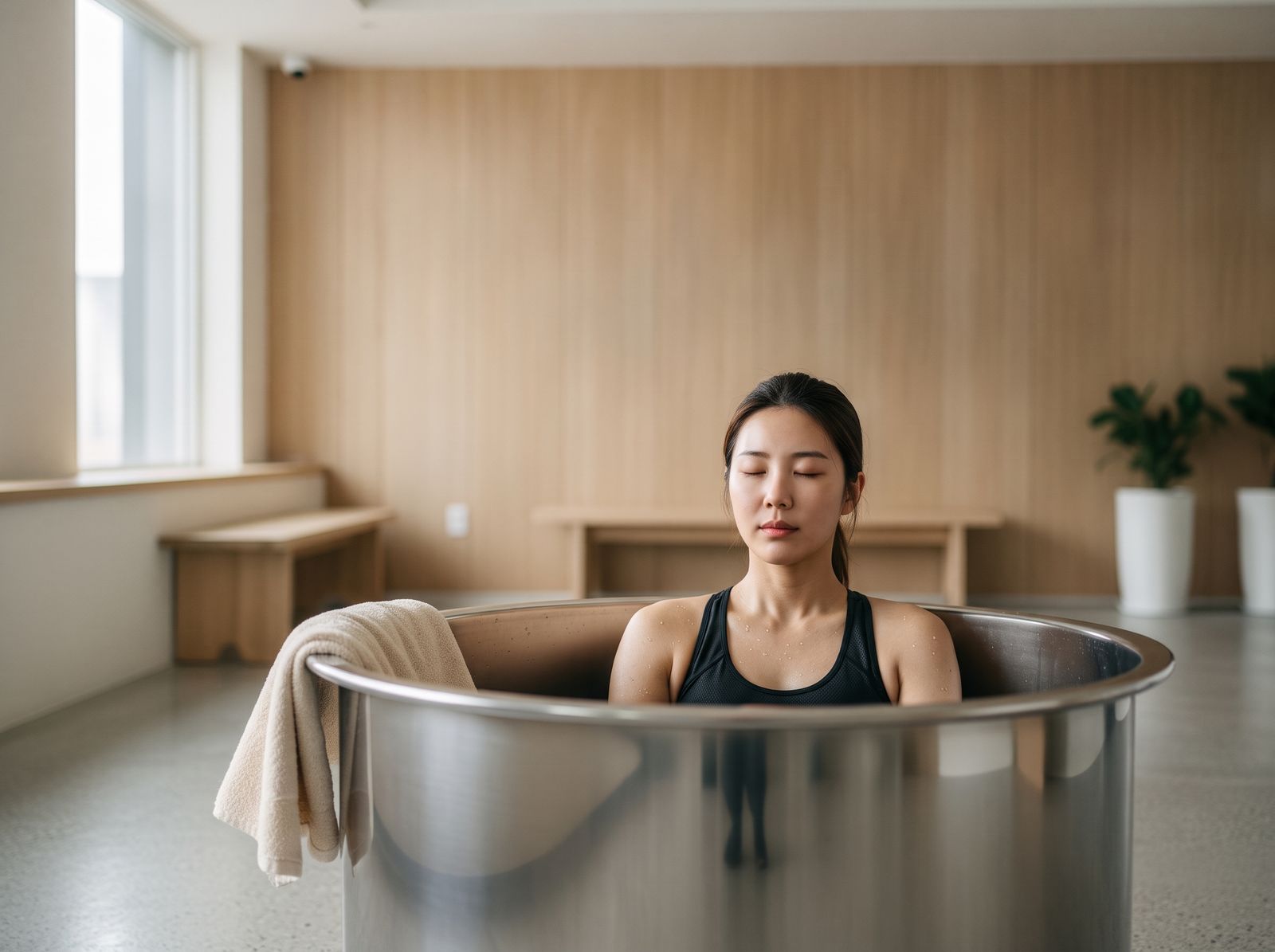
It made no meaningful difference to the recovery of strength. And these results describe the hours after a single hard session. That is useful, perhaps, for an athlete between matches, but a different question from building fitness over months.
Straight after strength training: adaptation may shrink
In a 2015 study in the Journal of Physiology, Roberts and colleagues had 21 active men strength-train twice a week for 12 weeks. One group spent 10 minutes in cold water after each session; the other used active recovery. After 12 weeks, strength and muscle mass had increased more in the active-recovery group, and the cross-sectional area of fast (type II) muscle fibres grew by 17% only in that group.
A second experiment in the same paper found cold water dampened the rise in satellite cells, which help repair muscle, and a key growth signal (p70S6K). The authors concluded that regular post-exercise cold-water immersion should be reconsidered. The study was small and included only young men, but if building strength and muscle is your goal, skipping the plunge straight after lifting is consistent with this evidence. How working muscle signals to the rest of the body is covered in myokines.
Stress, sleep and general health: still early
A 2025 systematic review in PLOS ONE analysed 11 randomised studies in healthy adults (3,177 participants, water at 7 to 15°C). Inflammation markers rose immediately after cold exposure; stress was lower only at the 12-hour mark, with no difference at other time points. One study reported 29% less sickness absence among people taking cold showers, and improvements in sleep quality and quality of life were reported, but not in mood.
The authors were clear about the limits: few trials, small samples, little diversity among participants. A 2017 review of cold-water immersion by Tipton and colleagues likewise found the evidence behind different claims uneven, with some still at the level of anecdote. Claims that cold plunges improve metabolism, immunity or mental health are, for now, best read as possibilities.
Who should avoid it, and how to be careful
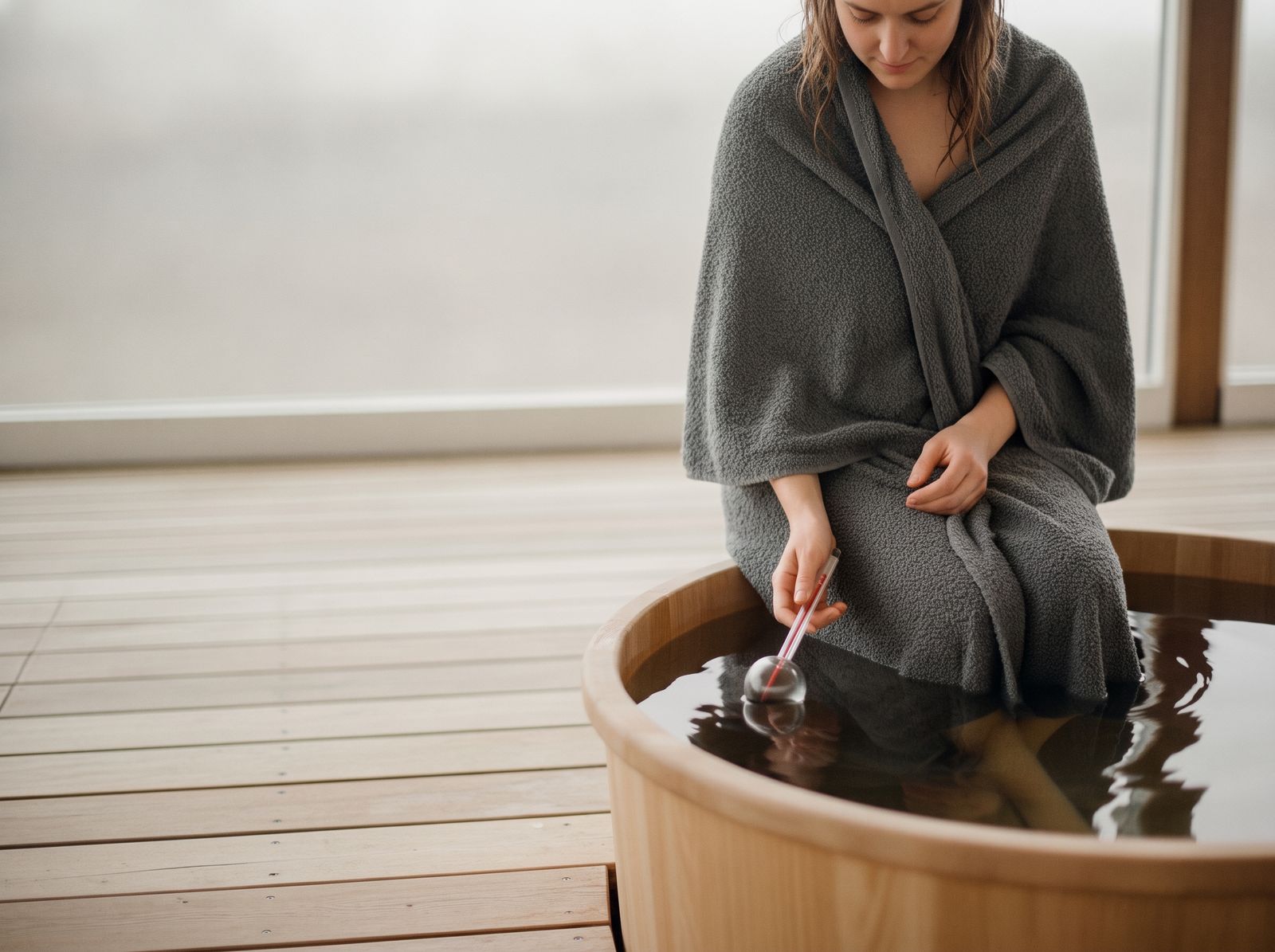
Cold water puts a sharp load on the heart even over a short time. Talk to a doctor before starting if any of these apply:
- Heart disease, an arrhythmia or high blood pressure, or a history of chest pain or fainting
- Pregnancy, a condition that affects circulation, or medication that does
- Older age, or a recent serious illness
If you try it, don’t do it alone, don’t put your head under or hold your breath, and start with water that is less cold, for a short time. Never plunge after drinking alcohol. If you feel chest pain, severe dizziness or difficulty breathing in the water, get out at once and ask for help. You can explore the heart in our body atlas.
Questions
Do ice baths help muscle recovery?
A meta-analysis found they help with soreness and perceived recovery in the 24 hours after high-intensity exercise. They did not improve strength recovery, and regular use right after strength training reduced muscle gains in one study.
Should I take an ice bath before or after lifting?
If your goal is building muscle, avoiding cold water straight after strength training fits the evidence. There is no set standard, so don’t push it, and talk to a doctor if you have a medical condition.
Do cold showers have the same effect?
Few studies look at cold showers. One reported less sickness absence, but the evidence is too thin to say they have a definite effect.
Sources
- Esperland D, de Weerd L, Mercer JB. Health effects of voluntary exposure to cold water: a continuing subject of debate. Int J Circumpolar Health. 2022
- Shattock MJ, Tipton MJ. ‘Autonomic conflict’: a different way to die during cold water immersion? J Physiol. 2012
- Moore E, et al. Impact of Cold-Water Immersion Compared with Passive Recovery Following a Single Bout of Strenuous Exercise on Athletic Performance in Physically Active Participants: A Systematic Review with Meta-analysis and Meta-regression. Sports Med. 2022
- Roberts LA, et al. Post-exercise cold water immersion attenuates acute anabolic signalling and long-term adaptations in muscle to strength training. J Physiol. 2015
- Cain T, et al. Effects of cold-water immersion on health and wellbeing: A systematic review and meta-analysis. PLoS One. 2025
- Tipton MJ, Collier N, Massey H, Corbett J, Harper M. Cold water immersion: kill or cure? Exp Physiol. 2017
Want to know more?
If you’d like to try BAHI Longevity or talk to us, leave your details and we’ll be in touch.