In short
- Hyperbaric oxygen therapy (HBOT) is breathing close to 100% oxygen at a pressure above one atmosphere. The Undersea and Hyperbaric Medical Society (UHMS) sets the threshold at 1.4 atmospheres absolute (ATA).
- The higher the pressure, the more oxygen dissolves directly into the plasma (Henry’s law).
- There are defined medical indications, such as decompression sickness, carbon monoxide poisoning and some non-healing wounds.
- Wellness chambers at around 1.3 ATA are not medical HBOT, and the evidence for their effects is still limited.
Most oxygen rides on haemoglobin
Most of the oxygen the blood carries is bound to haemoglobin in red blood cells. In a healthy person, arterial haemoglobin is already 95 to 100% saturated. So breathing more deeply, or raising the oxygen concentration at normal pressure, adds little to what is carried.
Oxygen dissolved directly in the plasma, the liquid part of the blood, behaves differently. By Henry’s law, the amount of gas that dissolves in a liquid is proportional to its pressure, so raising pressure and oxygen concentration together multiplies the oxygen in the plasma. In 1960 the Dutch surgeon Ite Boerema’s team showed that pigs could be kept alive on plasma-dissolved oxygen alone in pure oxygen at 3 atmospheres, in a paper titled “Life without blood”.
Two dials: pressure and oxygen
Two values matter together. One is pressure: sea level is 1 atmosphere (1 ATA), and every 10 m of water adds one more, so 10 m deep is 2 ATA. The other is the oxygen concentration of what you breathe; ordinary air is about 21%.
Medical hyperbaric oxygen therapy in hospital usually means breathing close to 100% oxygen through a mask or hood at 2 to 3 ATA, for one to two hours a session. The number of sessions and the pressure follow condition-specific protocols set by a doctor.
Medical indications
The UHMS defines hyperbaric oxygen therapy as breathing close to 100% oxygen at 1.4 ATA or more, and maintains a list of indications with established evidence. Typical ones include:
- Decompression sickness; air or gas embolism
- Carbon monoxide poisoning
- Gas gangrene and other necrotising soft-tissue infections
- Delayed tissue injury after radiation therapy
- Non-healing wounds such as diabetic foot ulcers; compromised skin grafts and flaps
- Sudden sensorineural hearing loss
In Korea, hospitals with hyperbaric units treat these conditions too.
How a 1.3 ATA chamber differs
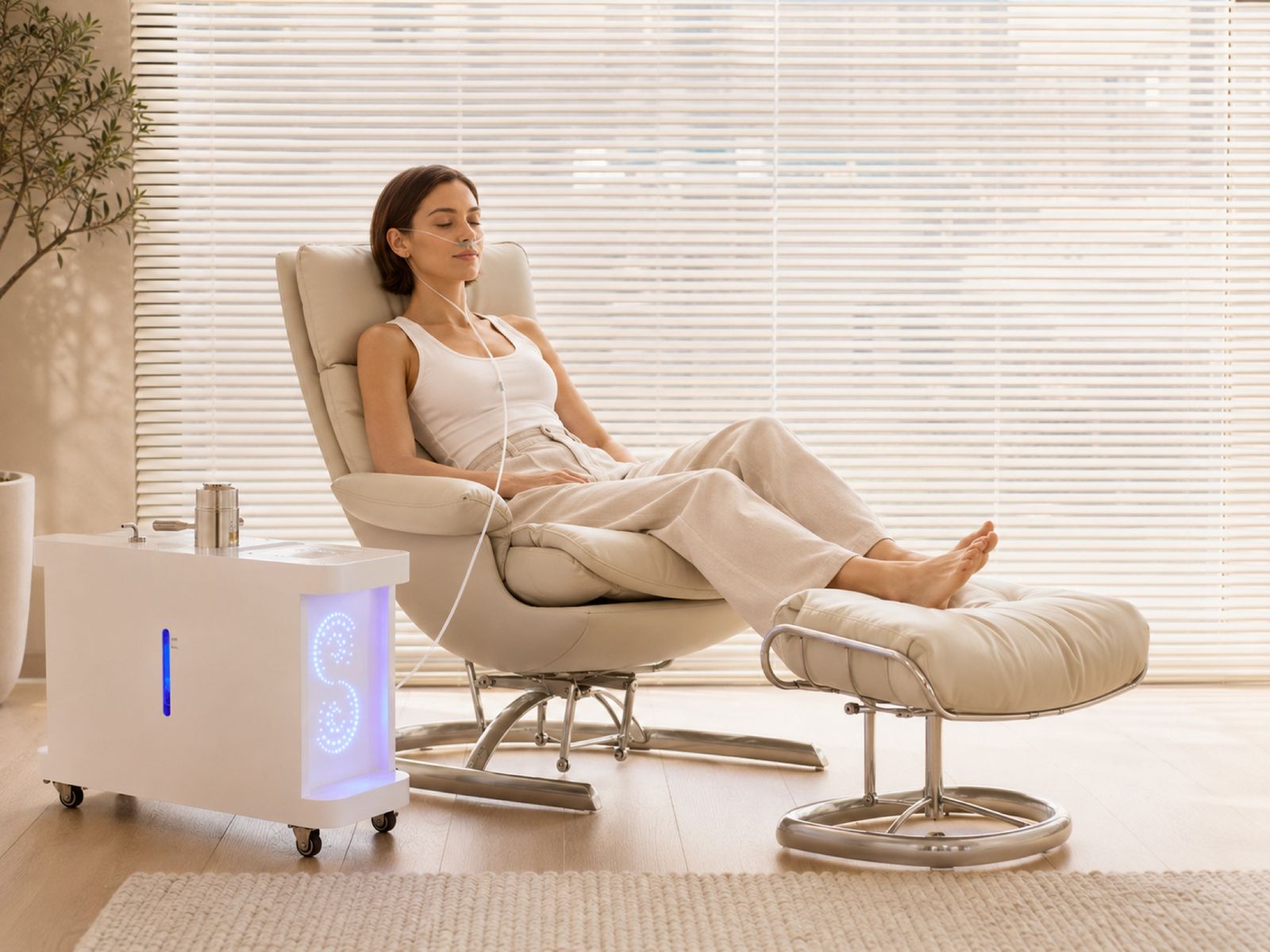
Chambers in wellness centres and homes often run at around 1.3 ATA, with air or oxygen from a concentrator. That falls short of the UHMS definition (1.4 ATA or more, close to 100% oxygen), so it is not classed as medical hyperbaric oxygen therapy. The U.S. FDA has cleared soft, low-pressure fabric chambers only for acute mountain sickness, and has warned consumers about claims that hyperbaric oxygen treats a long list of conditions.
Research on what low-pressure chambers do for everyday fatigue or recovery is still small, and it is too early for conclusions. That does not make them pointless. But knowing exactly what can be expected, and what is not yet known, is the place to start.
Using it safely
- Ears: as pressure rises, it builds outside the eardrum first. Swallow or yawn to equalise, and postpone a session if you have a cold, rhinitis or an ear infection.
- Lungs: if you have had a collapsed lung or have lung disease, talk to a doctor first.
- Fire: oxygen-rich air ignites easily. Leave lighters, portable electronics and oil-based cosmetics outside the chamber.
- If enclosed spaces bother you, say so beforehand and check that you can ask for decompression at any time.
BAHIOLOGY and hyperbaric oxygen
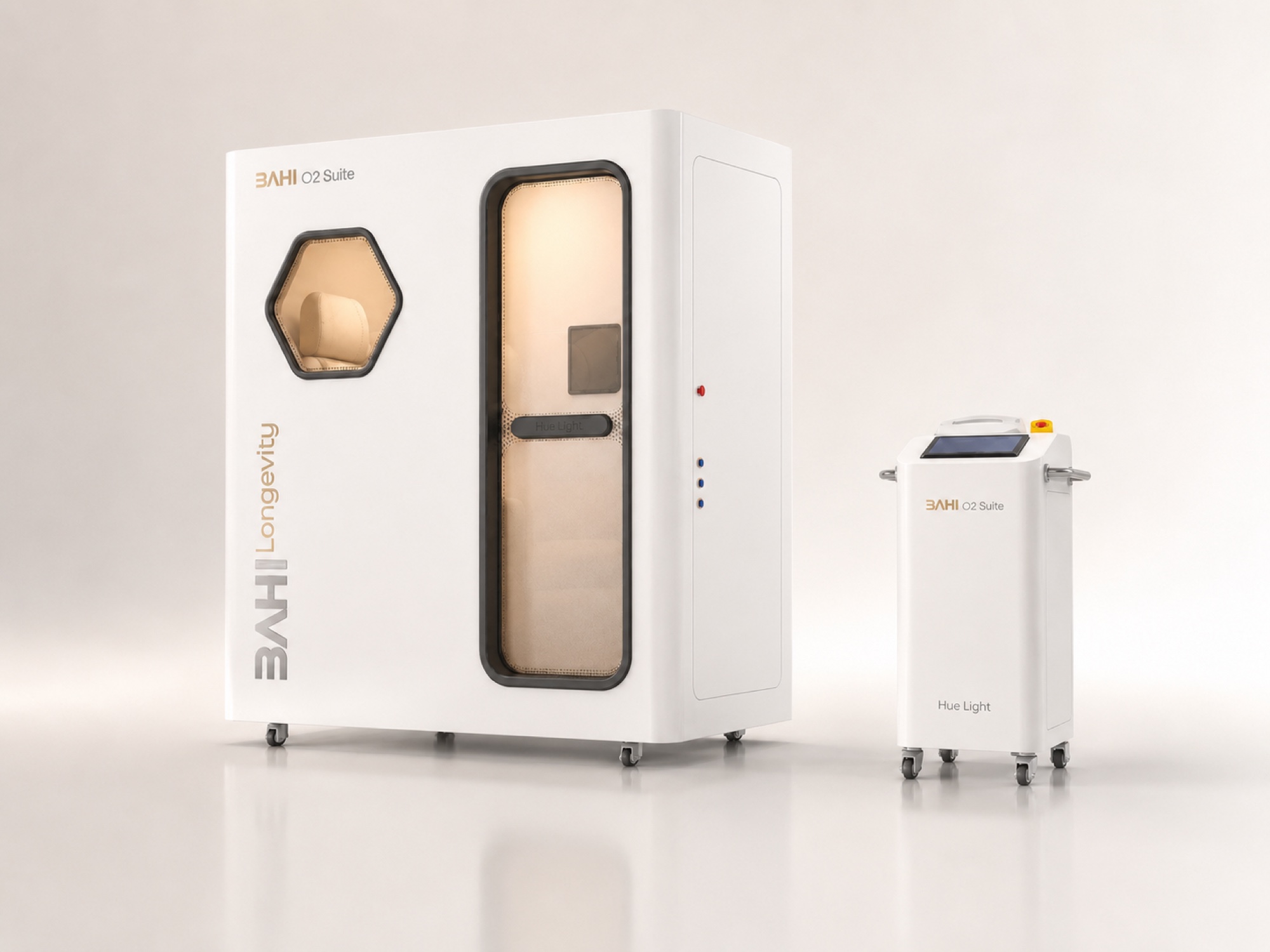
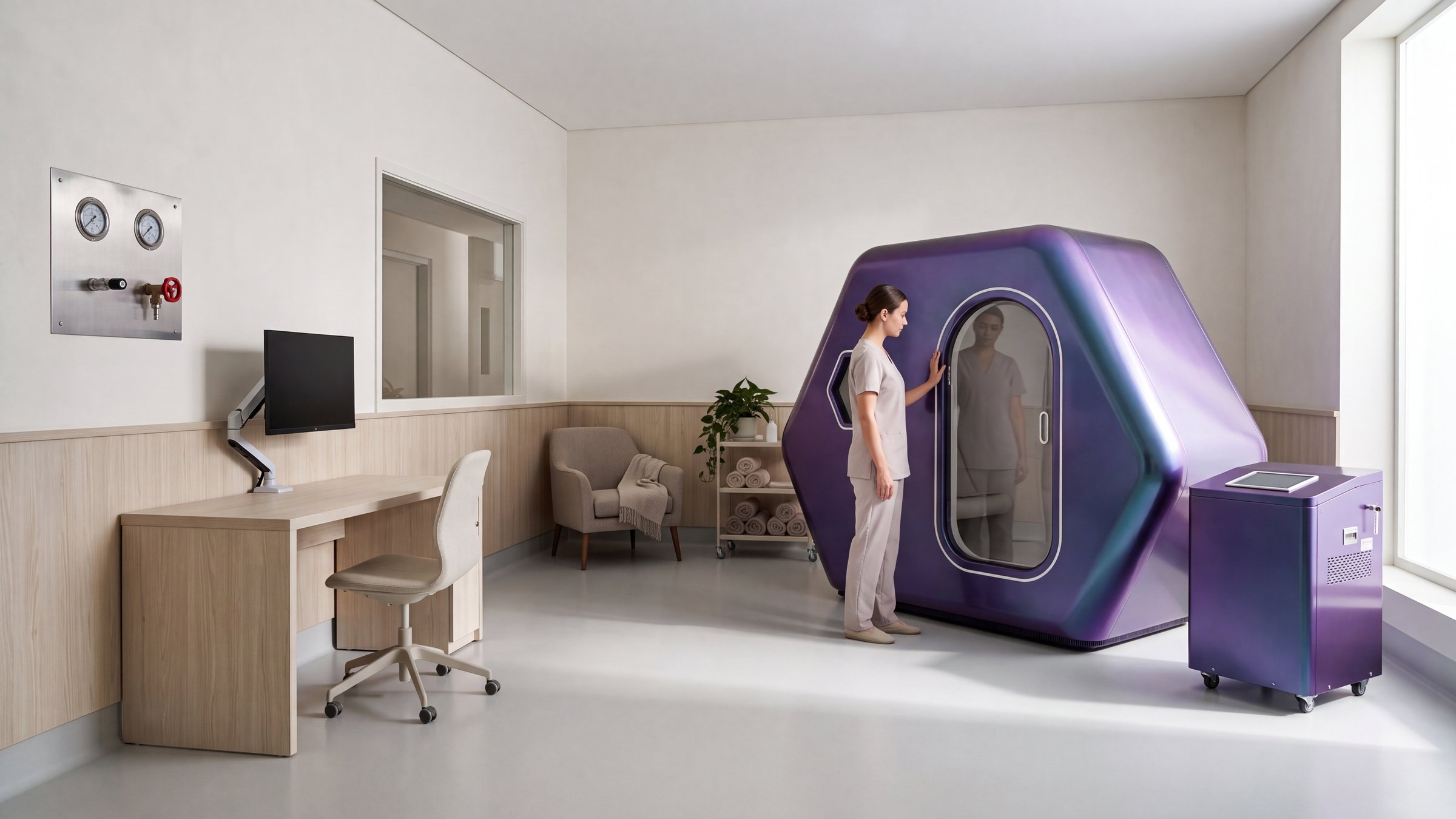
BAHIOLOGY researches and develops chambers that control oxygen concentration and pressure, built together with its investor and manufacturing partner Hue Light Co., Ltd. The device is introduced on our technologies page. This article explains the principle and the state of the research; it does not replace medical hyperbaric oxygen therapy or promise any particular effect.
Questions
Why do my ears feel blocked in the chamber?
As the chamber pressurises, pressure outside the eardrum rises before the middle ear catches up. Swallowing or yawning opens the Eustachian tube that links ear and nose, and the pressure evens out. If it hurts, say so straight away and stop pressurising.
Is it the same as canned oxygen or an oxygen bar?
No. Slightly raising the oxygen concentration at normal pressure does little to increase the oxygen dissolved in plasma. Hyperbaric oxygen raises the pressure as well.
Can I have hyperbaric oxygen therapy every day?
For medical HBOT, a doctor sets the number and spacing of sessions according to condition-specific protocols. Breathing pure oxygen at high pressure for too long can cause oxygen toxicity, so set times are kept.
Sources
Want to know more?
If you’d like to try BAHI Longevity or talk to us, leave your details and we’ll be in touch.