In short
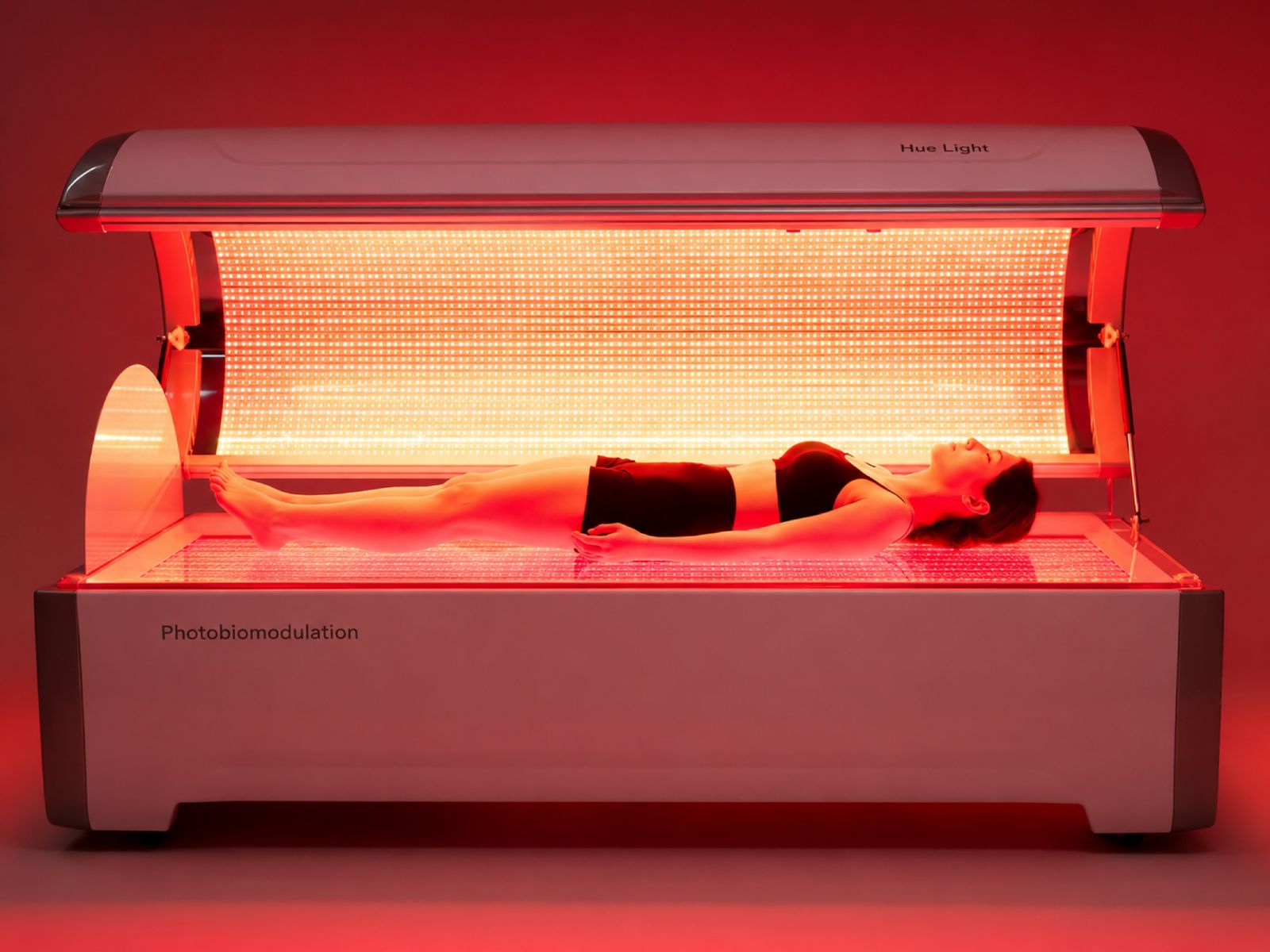
- Photobiomodulation (PBM) uses red light (about 600 to 700 nm) and near-infrared light (about 780 to 1100 nm) to draw a response from cells, at intensities that produce almost no heat.
- The most widely accepted explanation: cytochrome c oxidase in the mitochondria absorbs the light, shifting cellular energy (ATP) production and signalling.
- More light is not better. There is a working range; too little or too much weakens the response (a biphasic dose response).
- The strongest evidence is for preventing oral mucositis during cancer treatment. Most other uses are still being studied.
Where the name comes from
The usual starting point is a 1967 experiment by the Hungarian physician Endre Mester. Testing whether low-power lasers caused cancer, he shone them on shaved mice, and the treated mice grew their hair back faster. For decades the field was known as low-level laser therapy (LLLT).
But LEDs can emit the same wavelengths as lasers, and “low-level” never had a clear threshold. From around 2015, photobiomodulation (modulating biology with light) became the standard term.
Which light it uses
PBM mostly uses red light (about 600 to 700 nm) and near-infrared light (about 780 to 1100 nm). This band is called the optical window: haemoglobin in the blood and water in tissue absorb relatively little of it, so it can travel beneath the skin. Near-infrared generally reaches deeper than red.
There is no ultraviolet. Nor is the point to warm tissue. Unlike an infrared sauna or heater, which raises body temperature, PBM works at intensities that produce almost no heat and relies on the photochemical effect of the light itself.
What happens inside the cell
The leading explanation sits in the mitochondria. Cytochrome c oxidase (complex IV), an enzyme of the electron transport chain, absorbs red and near-infrared light. The hypothesis is that light frees the enzyme from nitric oxide (NO), which had been binding to it and slowing it down, so oxygen use and ATP production run more smoothly.
Along the way, signals such as reactive oxygen species and calcium shift briefly, and that signal is thought to carry through to gene expression in the nucleus. It does not explain every observation, though; other studies look at ion channels in the cell membrane or at water molecules inside the cell.
Not too little, not too much
A concept that keeps returning in PBM research is the biphasic dose response. Too little light does nothing; in the right range the response grows; past it, the response shrinks or is even suppressed. That is why “longer and stronger is better” does not hold.
So any talk of PBM needs the wavelength (nm) together with the power density (mW/cm²), the exposure time, and the energy density that results from both (J/cm²). Two “red lights” with different values are entirely different conditions.
How far the research has come
The firmest evidence concerns oral mucositis, the painful mouth sores that come with cancer treatment. After a systematic review, the Multinational Association of Supportive Care in Cancer (MASCC/ISOO) included PBM in its clinical practice guidelines for preventing oral mucositis in specific settings such as haematopoietic stem cell transplantation.
Studies continue on muscle recovery, joint pain, skin, hair and much more. But wavelengths, intensities and times vary so widely between studies that results are hard to compare, and most are not yet at the stage of firm conclusions. Advertising that promises specific effects is best read with that in mind.
Before you use it
- Do not look straight into a strong light source. Wear the goggles or eye covers the device recommends.
- If you take medication that makes you sensitive to light, or have a light allergy, talk to a doctor first.
- If you are pregnant or being treated for a diagnosed condition, check with your doctor before use.
- PBM does not replace diagnosis or treatment.
BAHIOLOGY and PBM
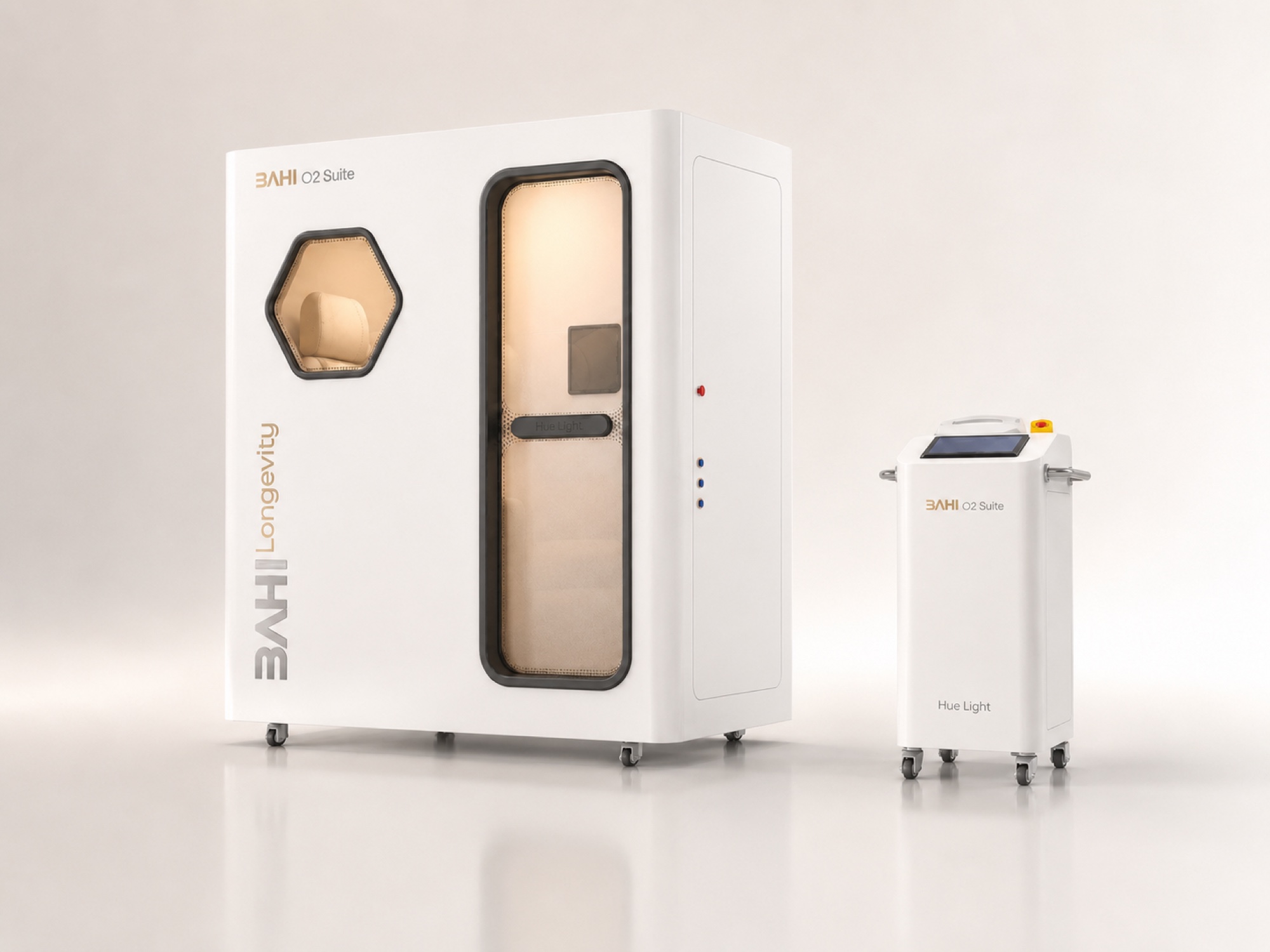
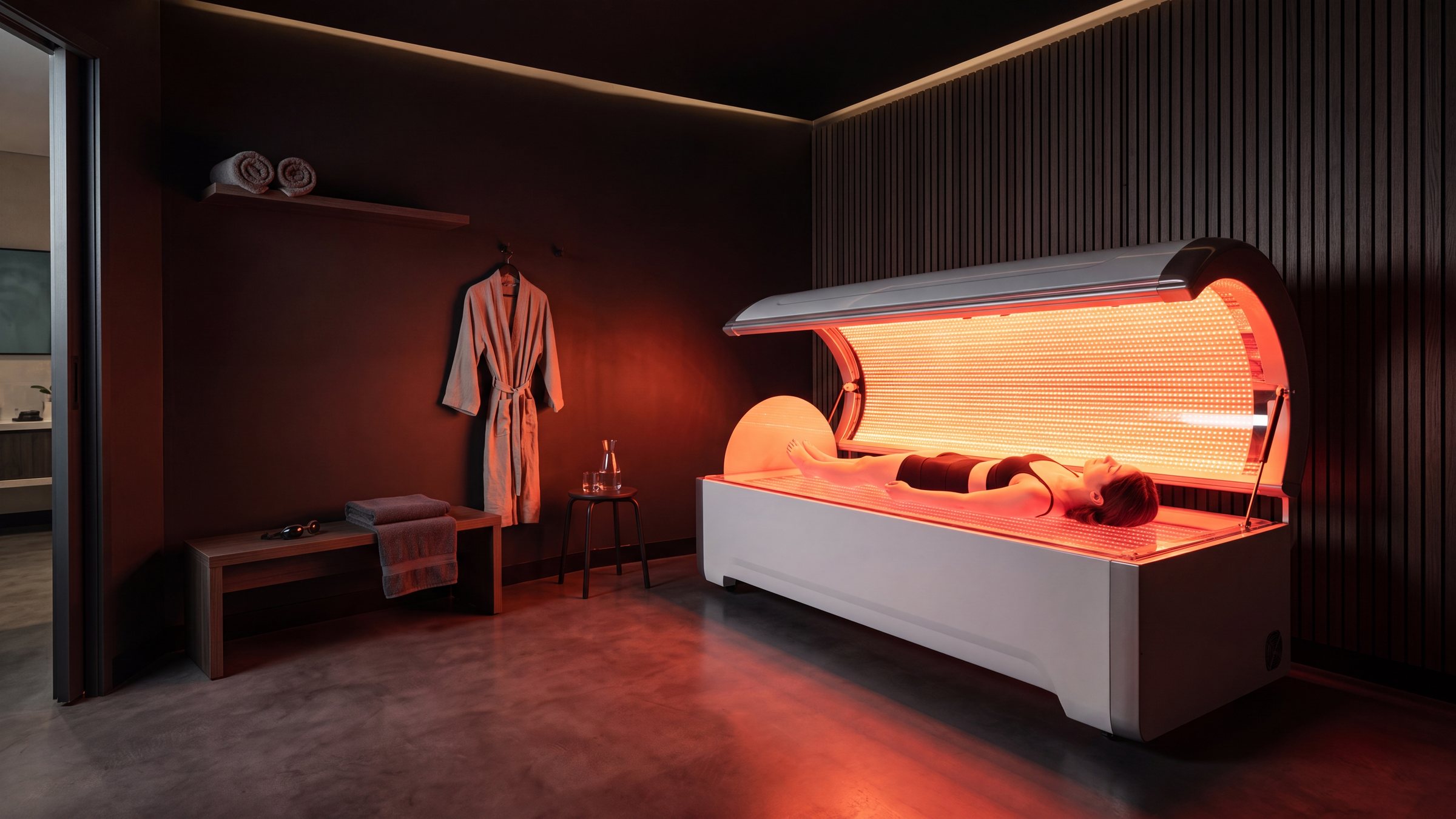
BAHIOLOGY researches and develops PBM systems that deliver precise wavelengths evenly across the whole body, built together with its investor and manufacturing partner Hue Light Co., Ltd. The device is introduced on our technologies page, and the spaces that run it on BAHI Longevity. This article explains the principle and the state of the research; it promises no particular effect.
Questions
Is PBM the same as an infrared sauna?
No. An infrared sauna aims to raise body temperature with heat. PBM uses specific wavelengths at intensities that produce almost no heat, relying on the photochemical reaction the light triggers in cells.
I only see red light. Is near-infrared there too?
Near-infrared is all but invisible to the human eye. Devices that combine red and near-infrared emit invisible light alongside the red you can see.
How often, and for how long?
Conditions vary from study to study and there is no settled standard. More light is not better, so keep to the time and intensity the device specifies, and talk to a doctor if you are being treated for a condition.
Sources
- Anders JJ, Lanzafame RJ, Arany PR. Low-level light/laser therapy versus photobiomodulation therapy. Photomed Laser Surg. 2015
- Hamblin MR. Mechanisms and applications of the anti-inflammatory effects of photobiomodulation. AIMS Biophys. 2017
- Huang YY, Chen AC, Carroll JD, Hamblin MR. Biphasic dose response in low level light therapy. Dose Response. 2009
- Zadik Y, et al. Systematic review of photobiomodulation for the management of oral mucositis in cancer patients and clinical practice guidelines. Support Care Cancer. 2019
Want to know more?
If you’d like to try BAHI Longevity or talk to us, leave your details and we’ll be in touch.