In short
- Wavelength (nm) tells you which light it is. How much light the body receives is measured as dose (J/cm²): irradiance (mW/cm²) multiplied by time.
- A 2026 study measuring four commercial LED masks found large differences in irradiance, so similar recommended session times produced very different doses.
- Face-mask skin studies and whole-body recovery studies are both small, and head-to-head comparisons under the same conditions are hard to find.
- A mask puts light right in front of the eyes. If you have an eye condition or take light-sensitising medication, talk to a doctor first.
Same 660nm, different conditions
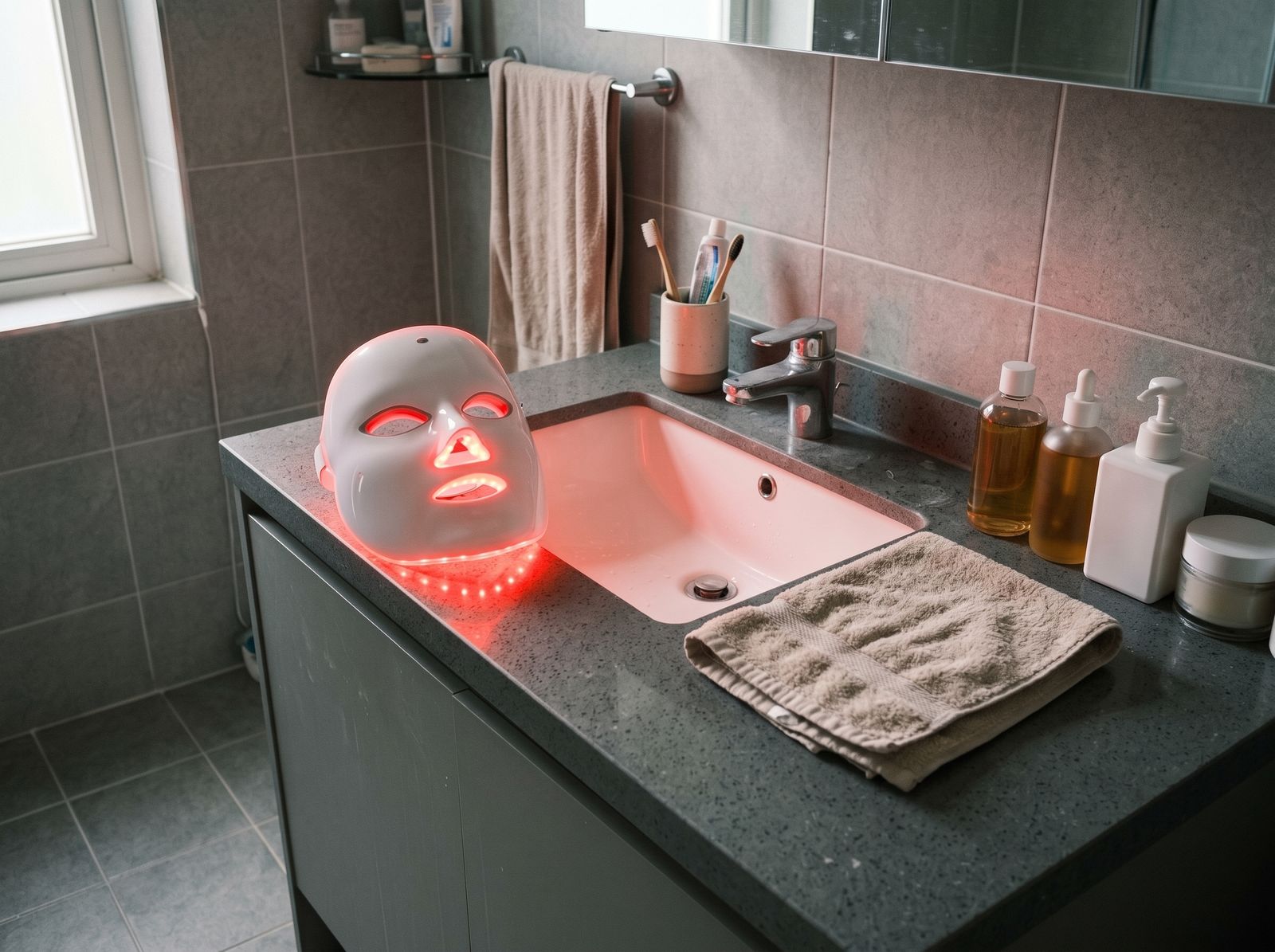
The first number you see when shopping for a red light device is the wavelength. Face masks and whole-body PBM devices can use the same 630 to 660nm red or 850nm near-infrared light, so on a spec sheet they can look alike. But wavelength only tells you what kind of light it is, not how much of it reaches the body. The basics are in What is photobiomodulation?.
A 2018 review in the Journal of Biomedical Optics by Zein, Selting and Hamblin noted that more than 50 years after PBM was discovered, there is still no agreement on parameters for clinical use. Wavelength, energy, power, irradiance, pulsing, treatment time and repetition can all vary, and that variety has at times produced contradictory results.
Dose is intensity multiplied by time
Irradiance is how much light power reaches each square centimetre of skin, in mW/cm². What matters is the value measured where the body actually sits, not the device’s total output. Multiply by time and you get dose, or fluence, in J/cm²: mW/cm² × seconds ÷ 1,000. So 6.4mW/cm² for 21 minutes (1,260 seconds) is about 8J/cm².
More is not automatically better. The same review describes recommendations ranging from under 100mW/cm² and 4 to 10J/cm² at the target tissue to as much as 50J/cm² at the skin surface. Tissues rich in mitochondria, such as muscle and brain, tended to respond to lower doses than skin or tendon, and where experiments in those tissues failed, overdosing was a more common reason than underdosing.
The catch is that consumers rarely see these numbers. A 2026 study in Photochemical & Photobiological Sciences measured the light from four commercial LED masks. Irradiance varied widely, in some cases exceeding the total irradiance of sunlight. Recommended session times were similar, so the resulting doses differed markedly. The manufacturers’ documentation lacked data such as emitted energy by wavelength range.
Area: one face versus a whole body
The clearest difference is how much of the body the light reaches. A mask covers facial skin. A whole-body device reaches the torso, back and limbs, including large muscle groups, in one session. At the same J/cm², a larger area means a proportionally larger total energy (J) delivered to the body.
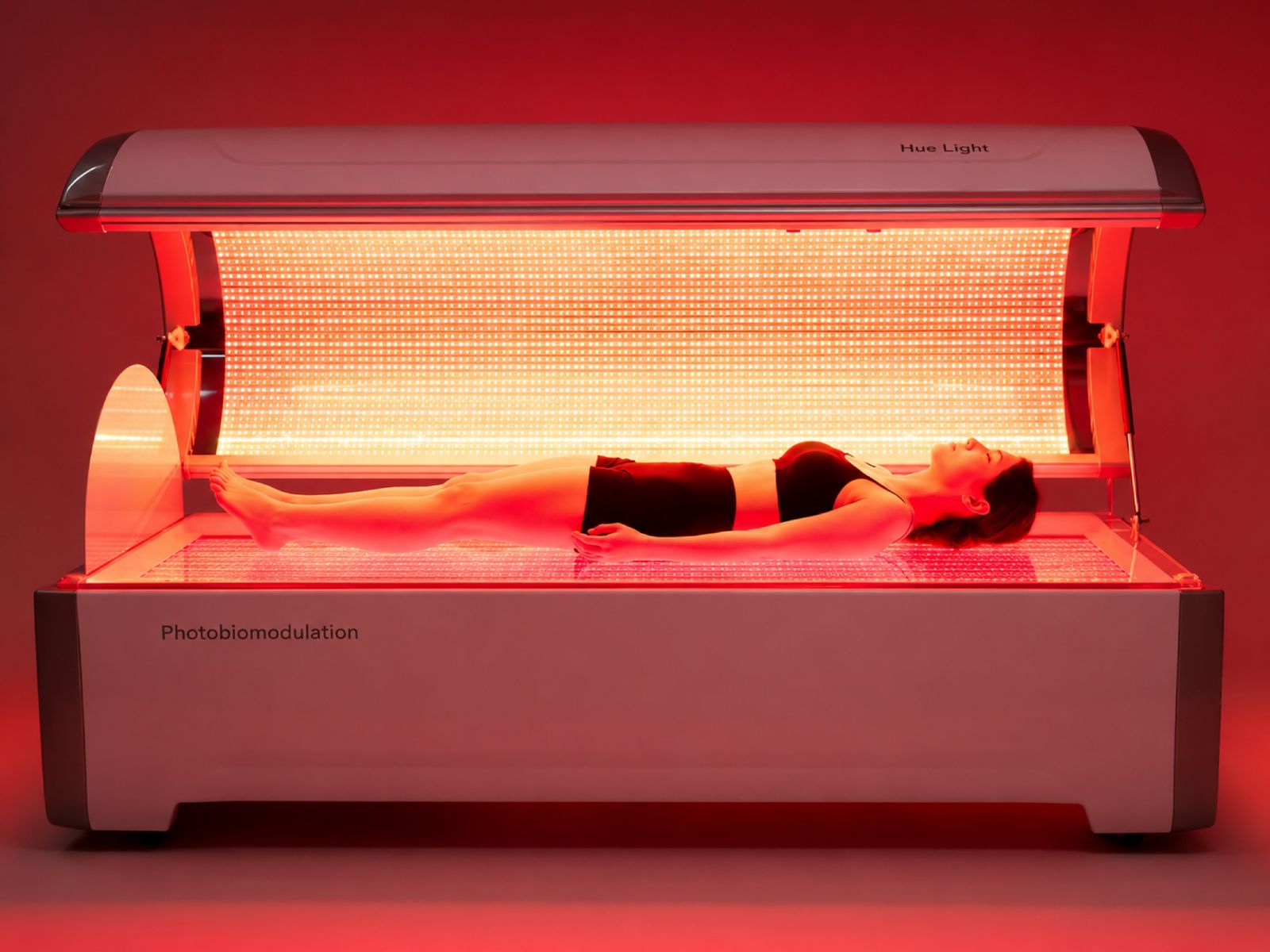
Whole-body devices bring their own problem. If the distance between the light and the body varies, the front, back and sides receive different intensities, so evenness of coverage and body position matter. Whether a larger area leads to a different response is still an open question; studies comparing face masks and whole-body devices under matched conditions are hard to find.
Where the research stands for each
LED face masks
A 2025 trial in Lasers in Medical Science by Bragato and colleagues randomised 95 women aged 45 to 60 in a double-blind, sham-controlled design. They used a 660nm red LED mask (6.4mW/cm², 8.05J/cm², 21 minutes) two or three times a week for four weeks. A wrinkle scale scored from photographs by three blinded specialists showed no difference between groups. Software measurements did show shorter frown-line and right crow’s-feet wrinkles than sham, and participants were more satisfied.
The result depended on how it was measured, and the treatment lasted four weeks. Facial skin studies are often this small and short, which leaves long-term questions open.
Whole-body PBM
A 2023 study in Lasers in Medical Science by Forsey and colleagues was a single-blind randomised crossover trial in 48 healthy, active adults. Twenty minutes of whole-body PBM before maximal cycling tests made no difference to power output, lactate, perceived recovery or stress compared with placebo. Heart rate variability (rMSSD) the next morning was higher than after placebo. It was one difference among many measures, which the authors read as a possible sign related to recovery.
Zooming out, a 2025 umbrella review in Systematic Reviews re-analysed 15 meta-analyses of PBM (204 randomised trials, over 9,000 participants, 35 health outcomes). Most outcomes had low or very low certainty of evidence, and the authors called for higher-quality trials and standardised protocols. Because it pools many kinds of devices, it says nothing specific about masks or whole-body systems.
Protect your eyes separately
A mask puts the light source right in front of the eyes. In 2019 a US skincare brand voluntarily recalled its LED acne mask, citing a theoretical risk of eye injury for a small subset of users with certain eye conditions or taking medication that increases the eyes’ sensitivity to light. The company said reported visual effects were rare, generally mild and transient.
- Don’t look directly into the light. In whole-body devices, wear the goggles or eye covers provided.
- If you have an eye condition or take light-sensitising (photosensitising) medication, talk to a doctor before use.
- If you notice eye discomfort or changes in vision during or after use, stop and get checked.
- Stick to the manufacturer’s time and frequency. Longer sessions do not simply add benefit.
BAHIOLOGY and PBM
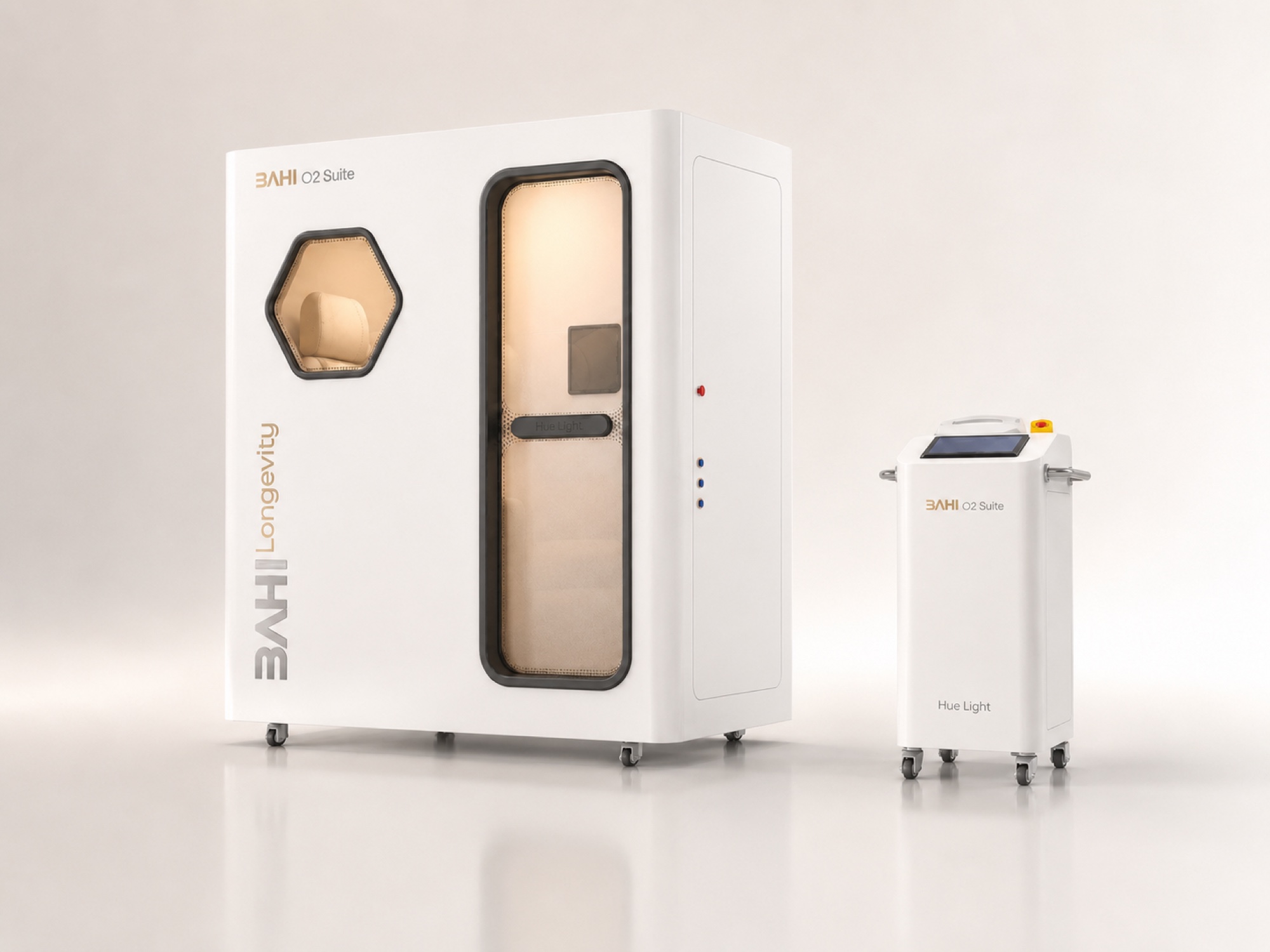
BAHIOLOGY researches and develops PBM devices that deliver precise wavelengths of light evenly across the whole body, built together with its investor and manufacturing partner Hue Light Co., Ltd. You can see the device in four technologies. This article explains exposure conditions and the state of research; it does not promise any particular effect.
Questions
Do red light masks actually work?
Small randomised trials report improvements in some measurements and in satisfaction, but in one such trial blinded specialists saw no difference in wrinkles. The research is still too small and short to be definitive.
Is a red light mask or whole-body red light therapy better?
Studies comparing them under the same conditions are hard to find. They differ in area and dose, so it is more accurate to treat them as different exposures and choose based on your purpose and health.
Can LED face masks damage your eyes?
For most users, reported visual effects have been rare and mild. People with certain eye conditions or on light-sensitising medication may be at risk and should talk to a doctor before use.
Sources
- Zein R, Selting W, Hamblin MR. Review of light parameters and photobiomodulation efficacy: dive into complexity. J Biomed Opt. 2018
- Baeza-Moyano D, Bernardez AM, Sola Y. Spectral emission variability in commercial LED masks for cosmetic use. Photochem Photobiol Sci. 2026
- Bragato EF, et al. Role of photobiomodulation application frequency in facial rejuvenation: randomized, sham-controlled, double-blind, clinical trial. Lasers Med Sci. 2025
- Forsey JD, et al. Whole-body photobiomodulation improves post-exercise recovery but does not affect performance or physiological response during maximal anaerobic cycling. Lasers Med Sci. 2023
- Son Y, et al. Effects of photobiomodulation on multiple health outcomes: an umbrella review of randomized clinical trials. Syst Rev. 2025
- Association of Optometrists (AOP). Eye injury risk prompts recall of Neutrogena light therapy acne mask. 2019
Want to know more?
If you’d like to try BAHI Longevity or talk to us, leave your details and we’ll be in touch.