In short
- Sarcopenia is a muscle disease in which strength and mass decline together. It received its own US ICD-10-CM code (M62.84) in 2016.
- The European criteria (EWGSOP2) look at low strength first. The Asian criteria (AWGS 2019) define low strength as grip below 28 kg in men and 18 kg in women.
- Diagnosis combines strength (grip, chair stand), muscle mass (DXA or bioimpedance) and physical performance (such as gait speed).
- International guidelines strongly recommend resistance exercise and conditionally recommend protein. They make no recommendation for vitamin D or hormone treatment.
A muscle disease, not just ageing
Sarcopenia is a loss of muscle mass together with a loss of strength and function. In 2018 the European Working Group on Sarcopenia in Older People (EWGSOP2) defined it as a muscle disease (muscle failure) rooted in adverse muscle changes that accumulate over a lifetime. It is common in older adults but can begin earlier.
The definition matters because of what follows. EWGSOP2 links sarcopenia to falls and fractures, loss of everyday function and higher mortality. In 2016 the US ICD-10-CM gave it a code, M62.84, marking it as something to diagnose and manage rather than a normal part of ageing. The skeleton it moves belongs to the same story.
European and Asian criteria
Both look at strength, muscle mass and physical performance. The cut-offs differ to reflect differences in body size.
Europe: EWGSOP2 (2019)
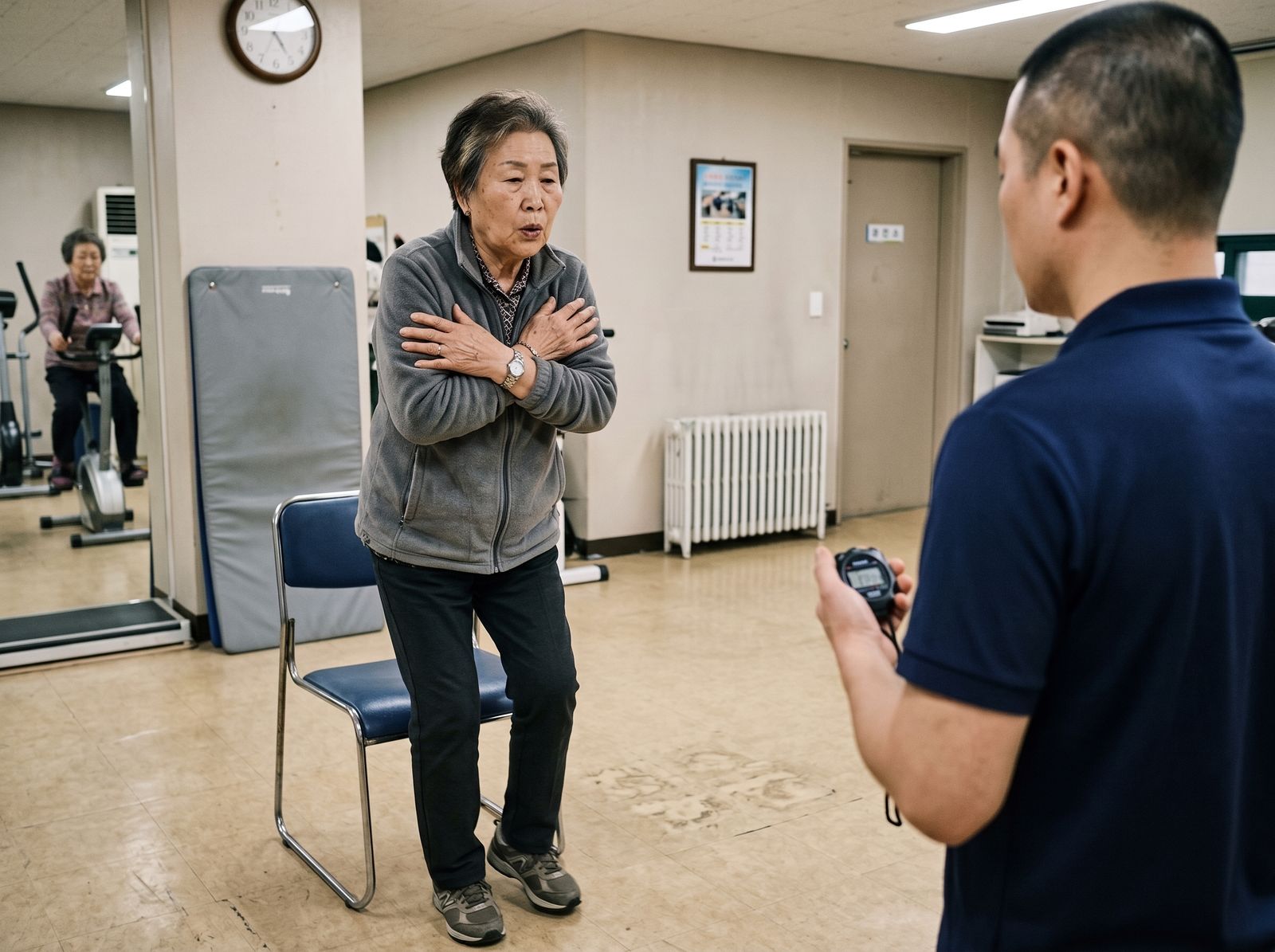
- Strength comes first. Grip below 27 kg in men or 16 kg in women, or more than 15 seconds to rise from a chair five times without using the arms, counts as low strength.
- Low strength means probable sarcopenia; low muscle mass as well confirms it.
- Poor physical performance on top, for example a gait speed of 0.8 m/s or less, marks it as severe.
Asia: AWGS 2019
- Criteria developed for Asian populations, with Korean researchers among the authors.
- Strength: grip below 28 kg in men, 18 kg in women.
- Physical performance: 6-metre gait speed below 1.0 m/s, five chair stands taking 12 seconds or more, or a Short Physical Performance Battery score of 9 or less.
- Muscle mass (height-adjusted appendicular muscle): by DXA, below 7.0 kg/m² in men and 5.4 kg/m² in women; by bioimpedance, below 7.0 kg/m² in men and 5.7 kg/m² in women.
- Screening uses calf circumference (below 34 cm in men, 33 cm in women) or the SARC-F questionnaire (4 or more). Low strength or low performance alone counts as possible sarcopenia, so lifestyle changes can start early.
How the tests work
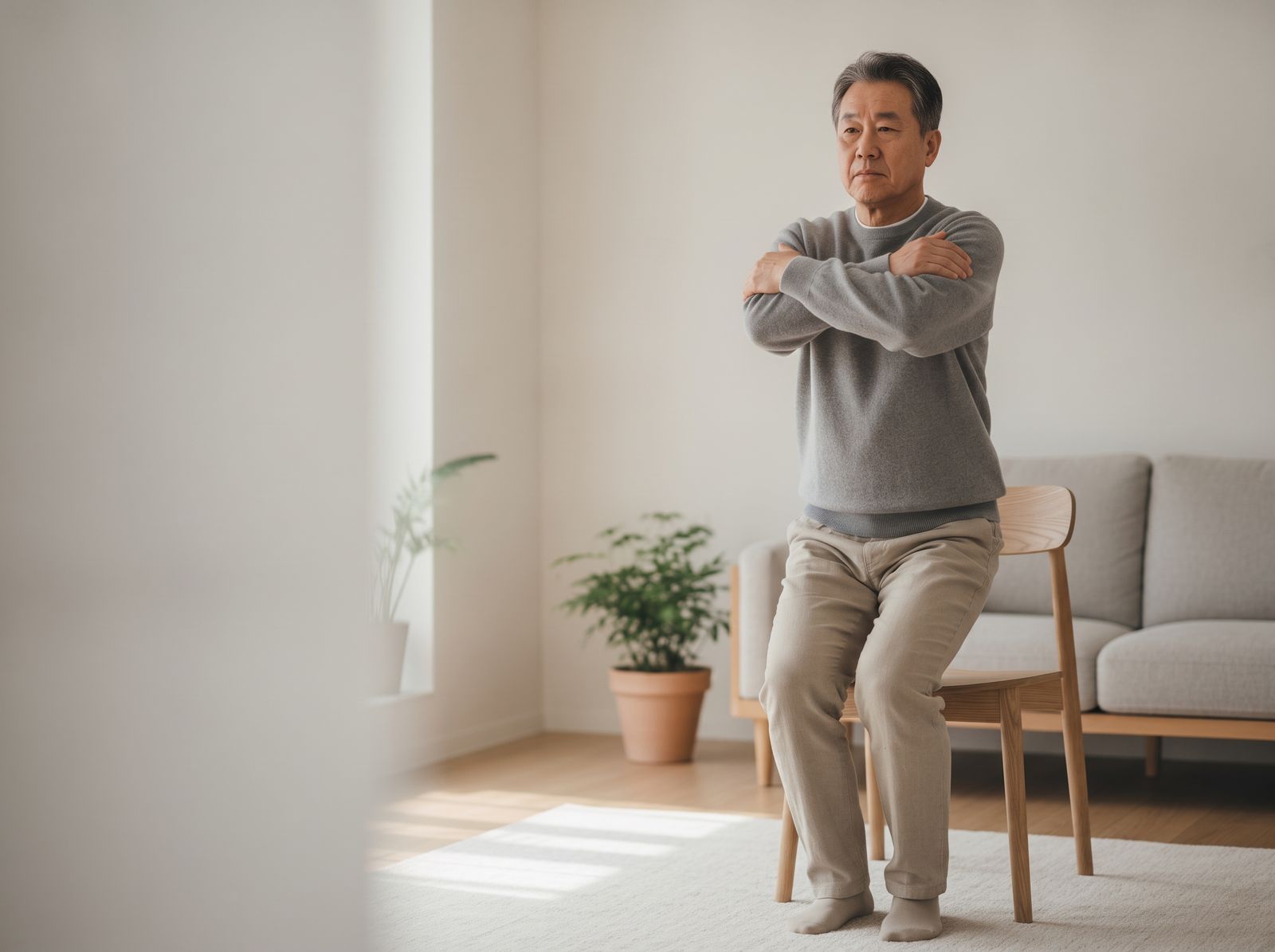
Grip strength is measured with a hand dynamometer. It seems to measure only the hand, but it correlates moderately with arm and leg strength, so clinics use it as an easy stand-in. The chair stand test times five rises from a chair without using the arms, standing in for the strength of the front thigh muscles.
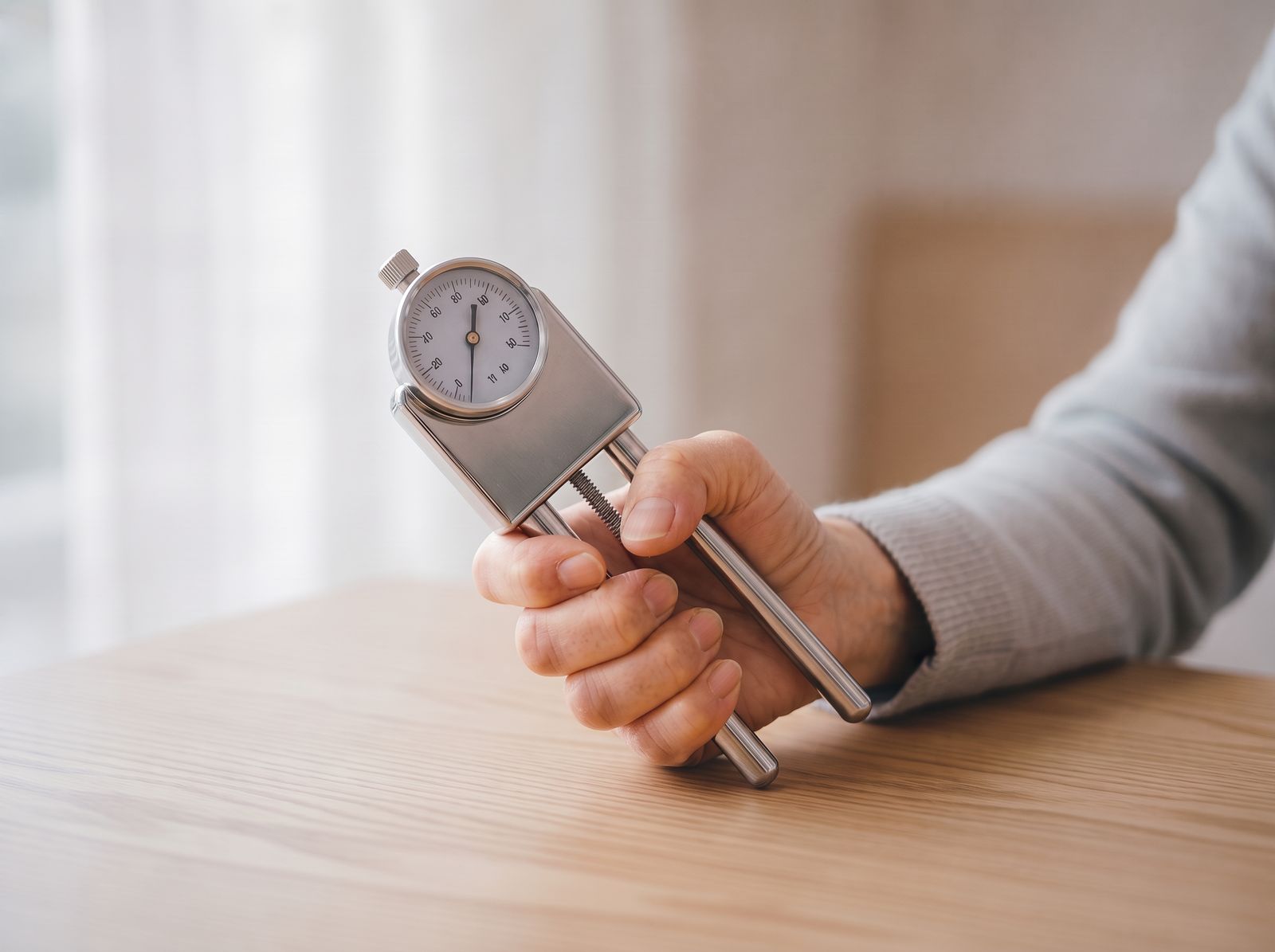
Muscle mass is measured by DXA or bioimpedance. A home body-composition scale or a tape measure around the calf can be a pointer, not a diagnosis. If a number falls below a cut-off, have it checked properly.
The strongest evidence: resistance exercise
The 2018 guidelines of the International Conference on Sarcopenia and Frailty Research (ICFSR) graded the evidence behind each option. The only treatment they recommended strongly was resistance-based physical activity, meaning exercise in which muscles work against a load. Rising from a chair, wall push-ups, elastic bands and machines all count.
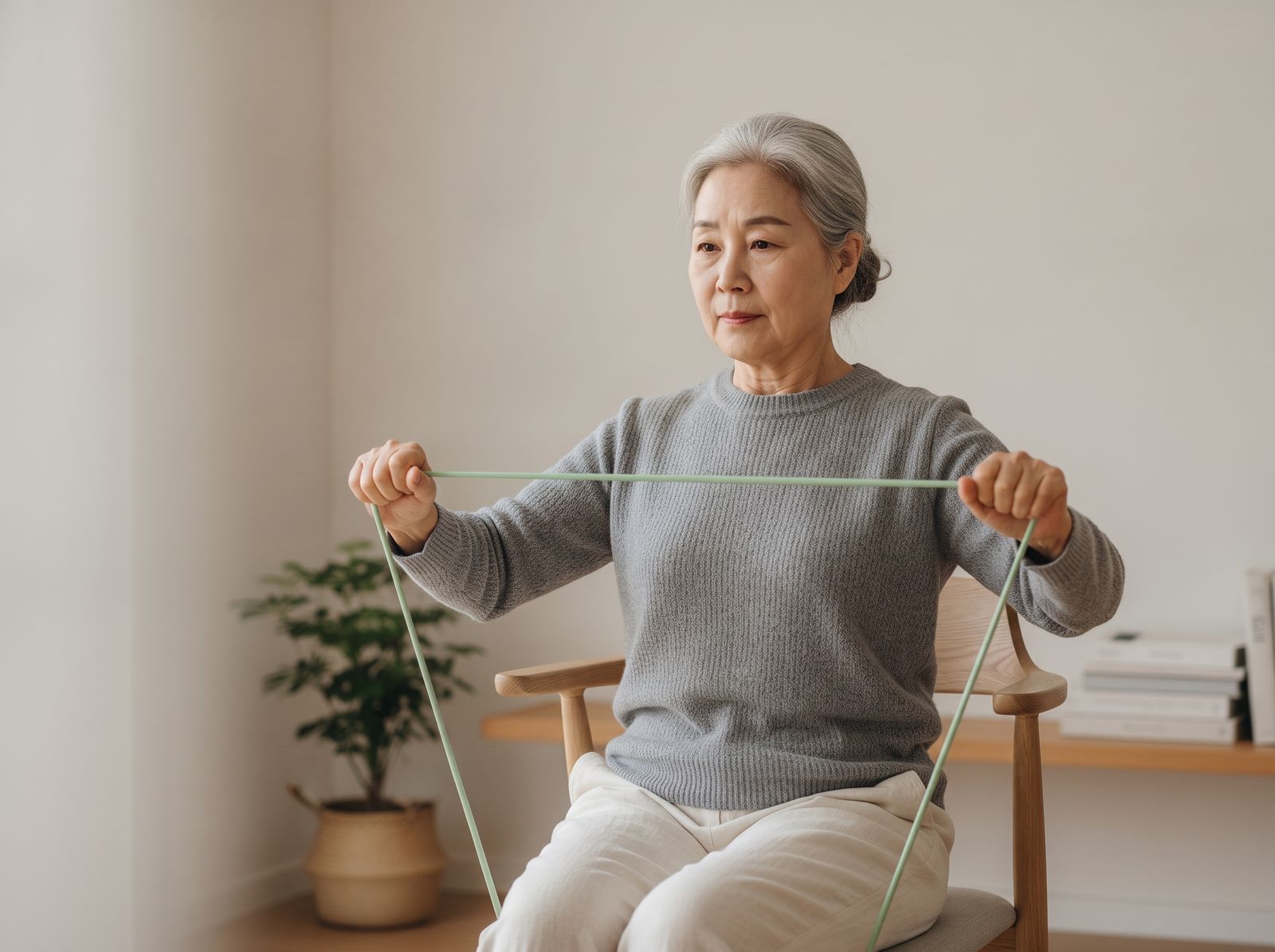
Joint pain or heart and lung conditions call for tailoring the type and intensity of exercise. In those cases it is safer to start with a doctor or an exercise professional.
Protein, and what else
The ICFSR guidelines conditionally recommend protein supplements or a protein-rich diet. In 2013 the PROT-AGE Study Group, convened by the European Union Geriatric Medicine Society, suggested that people over 65 eat at least 1.0 to 1.2 g of protein per kilogram of body weight per day to keep muscle mass and function; 1.2 g or more for those who exercise, and 1.2 to 1.5 g for older people with acute or chronic illness.
They also named an exception: people with severe kidney disease (eGFR below 30) who are not on dialysis may need to limit protein. Check kidney function before raising protein if it is a concern. The same ICFSR guidelines made no recommendation for vitamin D supplements or hormone treatment and found no robust evidence for other options.
When to see a doctor
- You have fallen in the past year, or go out less for fear of falling
- Getting up from a chair or climbing stairs has become noticeably harder
- You are losing weight without trying
- You have kidney or heart disease and want to increase exercise or protein
The signals muscle sends to the rest of the body are covered next, in the article on myokines.
Questions
Where is sarcopenia diagnosed?
Family medicine, geriatrics and rehabilitation clinics measure grip strength, chair stands and gait speed, and muscle mass by DXA or bioimpedance.
What grip strength counts as low?
Under the Asian criteria (AWGS 2019), below 28 kg in men and 18 kg in women; under the European criteria (EWGSOP2), below 27 kg and 16 kg. Low grip alone means possible or probable sarcopenia; low muscle mass is needed for a diagnosis.
Is a protein supplement enough?
Guidelines recommend protein conditionally; their strong recommendation is resistance exercise. Protein alone is not enough, and people with severe kidney disease should talk to a doctor before increasing it.
Sources
- Cruz-Jentoft AJ, Bahat G, Bauer J, et al. Sarcopenia: revised European consensus on definition and diagnosis. Age Ageing. 2019
- Chen LK, Woo J, Assantachai P, et al. Asian Working Group for Sarcopenia: 2019 Consensus Update on Sarcopenia Diagnosis and Treatment. J Am Med Dir Assoc. 2020
- Dent E, Morley JE, Cruz-Jentoft AJ, et al. International Clinical Practice Guidelines for Sarcopenia (ICFSR): Screening, Diagnosis and Management. J Nutr Health Aging. 2018
- Bauer J, Biolo G, Cederholm T, et al. Evidence-based recommendations for optimal dietary protein intake in older people: a position paper from the PROT-AGE Study Group. J Am Med Dir Assoc. 2013
- Anker SD, Morley JE, von Haehling S. Welcome to the ICD-10 code for sarcopenia. J Cachexia Sarcopenia Muscle. 2016
Want to know more?
If you’d like to try BAHI Longevity or talk to us, leave your details and we’ll be in touch.