The secret of a longer healthspan
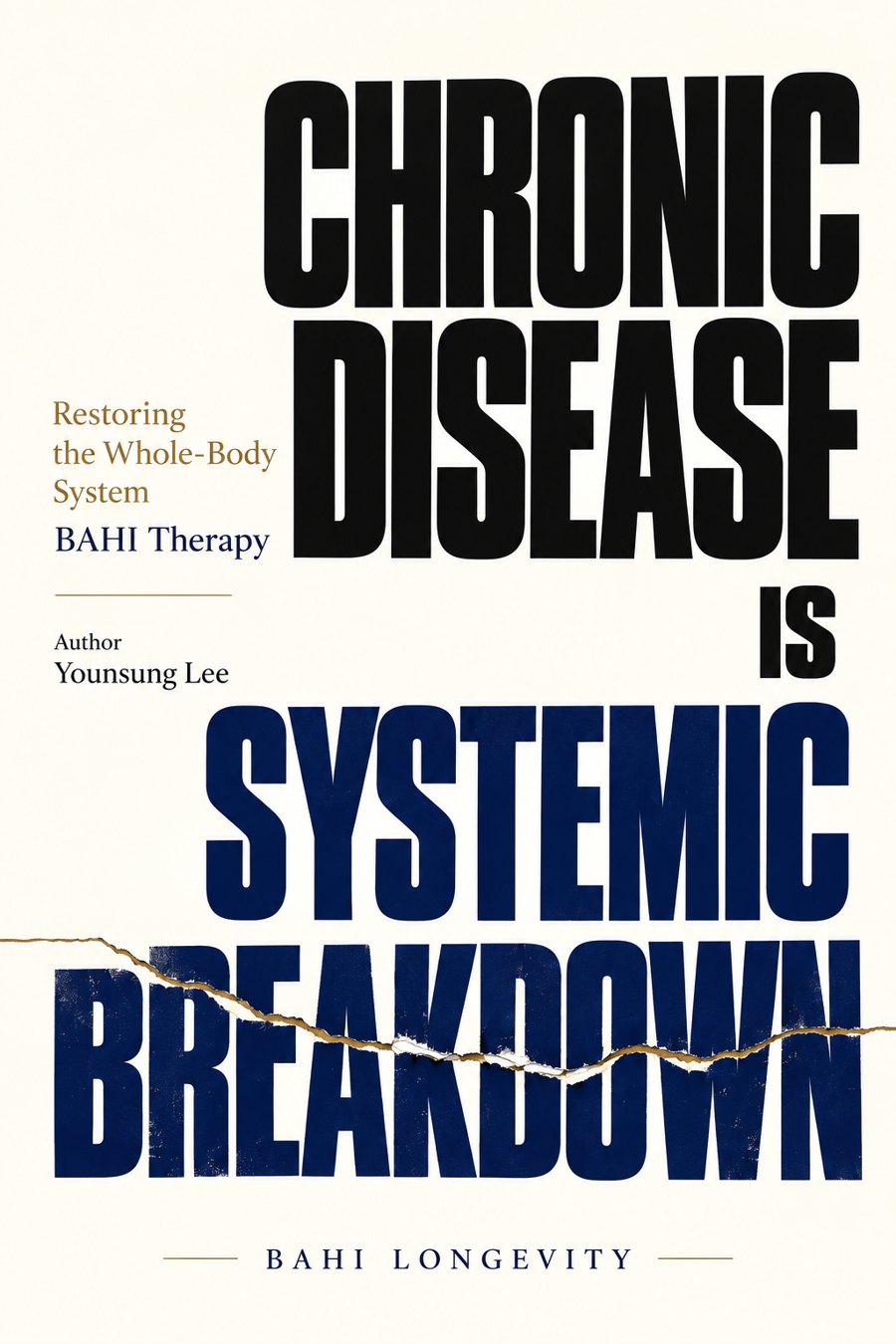
The whole book reduces to one sentence: chronic disease is not one organ failing but a whole system breaking down, so the answer is not to suppress the broken part but to restore the conditions under which the body repairs itself. Life expectancy has already grown; the question now is in what state we live those years.
The author has come to doubt the idea that ageing is only wear and tear, while noting this view is not yet settled science. What is clear is that wounds close and bones knit because the body does it. Two tasks follow: protect those conditions before they fail, and restore them once they have.
System restoration as a direction, and its limits
Here the author draws a line. The physical restoration methods in the book are not finished answers. There are observed signals and there are unknowns, and he has tried throughout not to mix them. What the signals seen in Parkinson's patients mean is still being checked through animal studies and collaborative research, and he promises to accept whatever the results show.
His framework, too, may one day be replaced by a better explanation, which he calls not failure but how science works. What does not change is the direction: if the cause is systemic breakdown, the answer must be systemic restoration. He calls this path BAHI Longevity and admits it is still narrow and needs much more testing.
Finally, to the reader
No method in this book heals anyone by itself, the author writes; healing is always the body's work. So he does not ask for a grand resolution, only a small shift: to listen seriously to the signals your body sends, not by rushing to a diagnosis but by asking, with a systems view, what is producing them. The epilogue's title is meant in that sense. Your health depends more on your own daily choices than on any doctor, and the book's one contribution, he says, is to remind you that this choice was always yours.
Questions this chapter answers
What is the difference between lifespan and healthspan?
Lifespan is how long you live; healthspan is how long you live in good health. The book aims to keep the years of illness short and at the very end of life.
How can I extend my healthspan, according to the book?
Through prevention, which protects the body's conditions for self-repair, and restoration, which brings them back once lost, starting with a small habit: taking your body's signals seriously.
Does "You Too Can Heal Yourself" mean stopping medical treatment?
No. The book says healing is the body's work and that its own methods are not finished answers; it does not tell anyone to replace medical care. This page summarises the book and is not medical advice.